Live briefing
Everything about Loop splitting
Compiler optimization technique
Loop splitting is a compiler optimization technique. It attempts to simplify a loop or eliminate dependencies by breaking it into multiple loops which have the same bodies but iterate over different contiguous portions of the index range. Wikipedia →
🧭 Start here: a 6-step reading path
- Read the overview: Loop splittingA 5-minute orientation
- Skim a recent paper: Integrating Mixed Halide Perovskite Photocatalytic HI Splitting and Electrocatalysis into a Loop for Efficient and Robust Pure Water SplittingInfluential work since 2022
- Pick up a classic book: Women Who Run with the WolvesThe most-reprinted book on the subject
- Read the landmark paper: The three-loop splitting functions in QCD: the non-singlet caseCited 1,036 times
- Go sideways: Loop unswitchingA closely related topic
- Go sideways: Loop fission and fusionA closely related topic
📖 Definitions
No dictionary entry for this exact phrase.
🗂️ The subject at a glance
🏆 Landmark papers (most cited)
The three-loop splitting functions in QCD: the non-singlet case
The three-loop splitting functions in QCD: the singlet case
One-loop splitting amplitudes in gauge theory
Two-Loop g gg Splitting Amplitudes in QCD
Four-loop non-singlet splitting functions in the planar limit and beyond
Mass splitting between charged and neutral winos at two-loop level
The spin-dependent two-loop splitting functions
The three-loop splitting functions in QCD: The helicity-dependent case
🆕 Influential since 2022
Integrating Mixed Halide Perovskite Photocatalytic HI Splitting and Electrocatalysis into a Loop for Efficient and Robust Pure Water Splitting
Closed-Loop Framework for Discovering Stable and Low-Cost Bifunctional Metal Oxide Catalysts for Efficient Electrocatalytic Water Splitting in Acid
Low moments of the four-loop splitting functions in QCD
Four-loop splitting functions in QCD – The quark-quark case
Four-loop splitting functions in QCD – The gluon-to-quark case
📚 Books worth reading
 Women Who Run with the WolvesClarissa Pinkola Estés · 1982
 Java software solutionsLewis, John, John E. Lewis Ph. D. · 1997
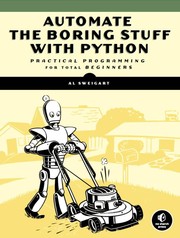 Automate the Boring Stuff with PythonAl Sweigart · 2015
 A treasury of knitting patternsBarbara G. Walker · 1968
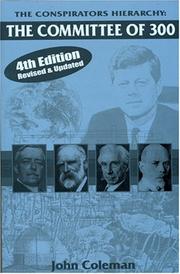 The Conspirators HierarchyJohn Coleman · 1992
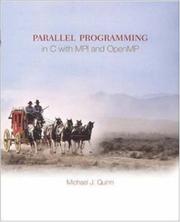 Parallel Programming in C with MPI and OpenMPMichael J. Quinn · 2003
 Time travelPaul J. Nahin · 1997
 Even Faster Web SitesSteve Souders · 2009
Ranked by number of editions on Open Library, a rough measure of how lasting a book is.
🔗 Related topics
- Loop unswitching Loop unswitching is a compiler optimization. It moves a conditional statement inside a loop outside by duplicating the loop's body and placing a version…
- Loop fission and fusion Loop fission (or loop distribution) is a compiler optimization in which a loop is broken into multiple loops over the same index range with each taking…
- Loop-invariant code motion In computer programming, loop-invariant code consists of statements or expressions (in an imperative programming language) that can be moved outside the…
- Loop invariant In computer science, a loop invariant is a property of a program loop that is true before (and after) each iteration. It is a logical assertion, sometimes…
- Optimizing compiler An optimizing compiler is a compiler designed to generate code that is optimized in aspects such as minimizing program execution time, memory usage, storage…
- Cilk Cilk, Cilk++, Cilk Plus and OpenCilk are general-purpose programming languages designed for multithreaded parallel computing. They are based on the C and…
- Automatic vectorization Automatic vectorization, in parallel computing, is a special case of automatic parallelization, where a computer program is converted from a scalar implementati…
- Nested function In computer programming, a nested function (or nested procedure or subroutine) is a named function that is defined within another (enclosing) block and…