Live briefing
Everything about Logical disk
A logical disk, logical volume or virtual disk is a virtual device that provides an area of usable storage capacity on one or more physical disk drive(s) in a computer system. The disk is described as logical or virtual because it does not actually exist as a single physical entity in its own right. The goal of the logical disk is to provide computer software with what seems a contiguous storage area, sparing them the burden of dealing with the intricacies of storing files on multiple physical units. Most modern operating systems provide some form of logical volume management. Wikipedia →
🧭 Start here: a 6-step reading path
- Read the overview: Logical diskA 5-minute orientation
- Pick up a classic book: Upgrade your Macintosh and save a bundleThe most-reprinted book on the subject
- Read the landmark paper: The logical diskCited 6 times
- Go sideways: Storage virtualizationA closely related topic
- Go sideways: Logical volume managementA closely related topic
📖 Definitions
No dictionary entry for this exact phrase.
🗂️ The subject at a glance
🏆 Landmark papers (most cited)
The logical disk
Volume analysis of disk spanning logical volumes
FuSnap: Fuzzy Control of Logical Volume Snapshot Replication for Disk Arrays
An analytic self-gravitating disk model: inferences and logical structure
An implementation of disk objects in the logical machine monitor
An O-O logical machine monitor supporting disk block migration
Location Service Framework for Private Cloud Storage System Based on Logical Disk
📚 Books worth reading
 Upgrade your Macintosh and save a bundleBob Brant · 1991
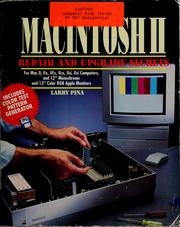 Macintosh II repair and upgrade secretsLarry Pina · 1991
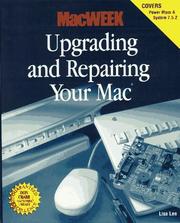 MacWeek upgrading and repairing your MacLee, Lisa. · 1995
 The Commodore 64 troubleshooting & repair guideRobert C. Brenner · 1985
 Mac OS 8.5 black book · 1998
Ranked by number of editions on Open Library, a rough measure of how lasting a book is.
🔗 Related topics
- Storage virtualization In computer science, storage virtualization is "the process of presenting a logical view of the physical storage resources to" a host computer system,…
- Logical volume management In computer storage, logical volume management (LVM) provides a method of allocating space on mass-storage devices that is more flexible than conventional…
- RAID RAID (Redundant Array of Independent Disks) is an orchestrated approach to computer data storage in which data is written to more than one secondary storage…
- Disk partitioning Disk partitioning or disk slicing is the creation of one or more regions on secondary storage, so that each region can be managed separately. These regions…
- Logical unit number In computer storage, a logical unit number (LUN) is a number used to identify a logical unit, which is a device addressed by the SCSI protocol or by storage…
- Disk formatting Disk formatting is the process of preparing a data storage device such as a hard disk drive, solid-state drive, floppy disk, memory card or USB flash drive…
- Logical block addressing Logical block addressing (LBA) is a common scheme used for specifying the location of blocks of data stored on computer storage devices, generally secondary…
- IBM SAN Volume Controller The IBM SAN Volume Controller (SVC) is a block storage virtualization appliance that belongs to the IBM System Storage product family. SVC implements an…