Everything about Log-normal distribution
Probability distribution

In probability theory, a log-normal (or lognormal) distribution is a continuous probability distribution of a random variable whose logarithm is normally distributed. Thus, if the random variable X is log-normally distributed, then Y = ln X has a normal distribution. Equivalently, if Y has a normal distribution, then the exponential function of Y, X = exp(Y), has a log-normal distribution. A random variable which is log-normally distributed takes only positive real values. It is a convenient and useful model for measurements in exact and engineering sciences, as well as medicine, economics and other topics (e.g., energies, concentrations, lengths, prices of financial instruments, and other metrics). Wikipedia →
🧭 Start here: a 6-step reading path
- Read the overview: Log-normal distributionA 5-minute orientation
- Skim a recent paper: The Use of a Log-Normal Prior for the Student t-DistributionInfluential work since 2022
- Pick up a classic book: Argonauts of the western PacificThe most-reprinted book on the subject
- Read the landmark paper: The multivariate Poisson-log normal distributionCited 283 times
- Go sideways: Folded normal distributionA closely related topic
- Go sideways: Normal distributionA closely related topic
📖 Definitions
Noun A random variable whose logarithm has a normal distribution.
🗂️ The subject at a glance
🏆 Landmark papers (most cited)
The multivariate Poisson-log normal distribution
Properties of the Log-Normal Particle Size Distribution
Permanence of the Log-Normal Distribution*
Estimating the Parameters of Log-Normal Distribution from Censored Samples
Bayesian and Non-Bayesian Analysis of the Log-Normal Distribution and Log-Normal Regression
Parameter estimation of the hybrid censored log-normal distribution
Progressively Censored Sampling in the Three Parameter Log-Normal Distribution
Pickup Probability of Sediment under Log-Normal Velocity Distribution
🆕 Influential since 2022
The Use of a Log-Normal Prior for the Student t-Distribution
A scale-invariant log-normal droplet size distribution below the critical concentration for protein phase separation
A scale-invariant log-normal droplet size distribution below the critical concentration for protein phase separation
Discriminating between log-normal and log-logistic distributions in the presence of type-II censoring
Statistical Analysis for Log-Normal Distribution in the Presence of Hybrid Censoring and Step-Stress
📚 Books worth reading
 Argonauts of the western PacificBronisław Malinowski · 1922
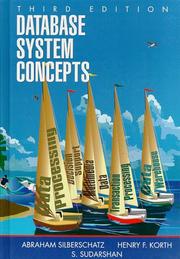 Database system conceptsAbraham Silberschatz · 1997
 Treaty Occupationay ToxicologySuelen Queiroz · 2010
 The history of Detroit and MichiganSilas Farmer · 1884
 Engineering Modelling and AnalysisDavid Walker, Michael Leonard · 2009
 Introduction to Multiple Time Series AnalysisHelmut Lütkepohl, Helmut Lutkepohl · 1991
- 📕Getting started with data scienceMurtaza Haider · 2015
- 📕Log Normal Distribution NotebookHäfliger 1917 Häfliger 1917 - Switzerland · 2016
Ranked by number of editions on Open Library, a rough measure of how lasting a book is.
🔗 Related topics
- Folded normal distribution The folded normal distribution is a probability distribution related to the normal distribution. Given a normally distributed random variable X with mean…
- Normal distribution In probability theory and statistics, a normal distribution or Gaussian distribution is a type of continuous probability distribution for a real-valued…
- Rectified Gaussian distribution In probability theory, the rectified Gaussian distribution is a modification of the Gaussian distribution when its negative elements are reset to 0 (analogous…
- Relationships among probability distributions In probability theory and statistics, there are several relationships among probability distributions. These relations can be categorized in the following…
- Chi distribution In probability theory and statistics, the chi distribution is a continuous probability distribution over the non-negative real line. It is the distribution…
- Central limit theorem In probability theory, the central limit theorem (CLT) states that, under appropriate conditions, the distribution of a normalized version of the sample…
- Generalized extreme value distribution In probability theory and statistics, the generalized extreme value (GEV) distribution is a family of continuous probability distributions developed within…
- Multivariate normal distribution In probability theory and statistics, the multivariate normal distribution, multivariate Gaussian distribution, or joint normal distribution is a generalization…