Live briefing
Everything about Loaded language
Rhetoric used to influence an audience
Loaded language is rhetoric used to influence an audience by using words and phrases with strong connotations. This type of language is very often made vague to more effectively invoke an emotional response and/or exploit stereotypes. Loaded words and phrases have significant emotional implications and involve strongly positive or negative reactions beyond their literal meaning. Wikipedia →
🧭 Start here: a 6-step reading path
- Read the overview: Loaded languageA 5-minute orientation
- Skim a recent paper: Loaded Language: Terminology Influences Everyday Beliefs About Emotions and People Expressing ThemInfluential work since 2022
- Pick up a classic book: Designing Web graphicsThe most-reprinted book on the subject
- Read the landmark paper: The power of moral words: Loaded language generates framing effects in the extreme dictator gameCited 70 times
- Go sideways: Persuasive definitionA closely related topic
- Go sideways: Semantic argumentA closely related topic
📖 Definitions
Noun Language using words, set phrases or idioms that have strong positive or negative connotations beyond their ordinary definitions.
🗂️ The subject at a glance
🏆 Landmark papers (most cited)
The power of moral words: Loaded language generates framing effects in the extreme dictator game
Watch Your Language! Racially Loaded Metaphors in Scientific Research
Wilderness and the Loaded Language of News
Locked (Down) and Loaded (Language): Effect of Policy and Speech on COVID-19 Outcomes
Tracking Affective Language Comprehension: Simulating and Evaluating Character Affect in Morally Loaded Narratives
Playing with words: Do people exploit loaded language to affect others’ decisions for their own benefit?
The effect of loaded language on audience comprehension of speeches
Dwight Bolinger, Language – the loaded weapon: The use and abuse of language today. London and New York: Longman, 1980. Pp. x + 214.
🆕 Influential since 2022
Loaded Language: Terminology Influences Everyday Beliefs About Emotions and People Expressing Them
TECHNIQUES FOR PRESENTING DIGITAL CULTURE-LOADED TEXTUAL MATERIAL IN TEACHING RUSSIAN AS A FOREIGN LANGUAGE
Contribution of Culture-loaded Loanwords to the Class of Etymological Doublets in the Contemporary English Language
Reliability of Phonemically Loaded Sentences in Spanish for Identifying Laryngeal Dystonia by Non-Spanish Speaking Speech-Language Pathologists
When language inspires and when language bamboozles: An analysis and appraisal of Words Like Loaded Pistols: The Power of Rhetoric from the Iron Age to the Information Age by Sam Leith
📚 Books worth reading
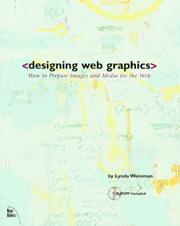 Designing Web graphicsLynda Weinman · 1996
 Level II ROMsMark D. Goodwin · 1983
Ranked by number of editions on Open Library, a rough measure of how lasting a book is.
🔗 Related topics
- Persuasive definition A persuasive definition is a form of stipulative definition which purports to describe the true or commonly accepted meaning of a term, while in reality…
- Semantic argument Semantic argument is a type of argument in which one fixes the meaning of a term in order to support their argument. Semantic arguments are commonly used…
- Emotive conjugation In rhetoric, emotive or emotional conjugation (also known as Russell's conjugation) is a rhetorical technique used to create an intrinsic bias towards…
- Charles Stevenson (philosopher) Charles Leslie Stevenson (June 27, 1908 – March 14, 1979) was an American analytic philosopher best known for his work in ethics and aesthetics. Stevenson…
- Appeal to emotion Appeal to emotion or argumentum ad passiones (meaning the same in Latin) is an informal fallacy characterized by the manipulation of the recipient's emotions…
- Emotivism Emotivism is a meta-ethical view that claims ethical sentences do not express propositions but emotional attitudes. Hence, it is colloquially known as…
- Connotation A connotation is a commonly understood cultural or emotional association that any given word or phrase carries, in addition to its explicit or literal…
- Pathos Pathos is a Greek term referring to appeal to the emotions and ideals of the audience, eliciting feelings that already reside in them. Pathos is most often…