Everything about Load management
Process of balancing the supply of electricity on a network

Load management, also known as demand-side management (DSM), is the process of balancing the supply of electricity on the network with the electrical load by adjusting or controlling the load rather than the power station output. This can be achieved by direct intervention of the utility in real time, by the use of frequency sensitive relays triggering the circuit breakers, by time clocks, or by using special tariffs to influence consumer behavior. Load management allows utilities to reduce demand for electricity during peak usage times, which can, in turn, reduce costs by eliminating the need for peaking power plants. In addition, some peaking power plants can take more than an hour to bring on-line which makes load management even more critical should a plant go off-line unexpectedly for example. Load management can also help reduce harmful emissions, since peaking plants or backup generators are often dirtier and less efficient than base load power plants. New load-management technologies are constantly under development — both by private industry and public entities. Wikipedia →
🧭 Start here: a 6-step reading path
- Read the overview: Load managementA 5-minute orientation
- Skim a recent paper: Review of peak load management strategies in commercial buildingsInfluential work since 2022
- Pick up a classic book: Seismic LoadsThe most-reprinted book on the subject
- Read the landmark paper: Peak-load management in steel plantsCited 170 times
- Go sideways: Zellweger off-peakA closely related topic
- Go sideways: Energy demand managementA closely related topic
📖 Definitions
No dictionary entry for this exact phrase.
🏆 Landmark papers (most cited)
Peak-load management in steel plants
An introduction to load management
Utility load management using home automation
Simulation-Based Load Synthesis Methodology for Evaluating Load-Management Programs
Peak-Load Energy Management by Direct Load Control Contracts
Operators’ Load Monitoring and Management
Electric Load Management on Machine Tools
Flexible load management using flexibility bands
🆕 Influential since 2022
Review of peak load management strategies in commercial buildings
Studies in precision crop load management of apple
Extension of HAAS for the Management of Cognitive Load
Microgrid energy management strategy considering source-load forecast error
Dynamic pricing based EV load management in distribution network
📚 Books worth reading
- 📕Seismic LoadsVictor M. Lyatkher · 2015
- 📕Estimation of potential runoff-contributing areas in Kansas using topographic and soil informationKyle E. Juracek · 1999
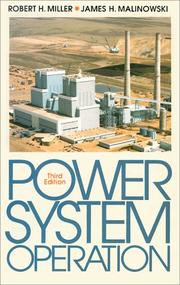 Power system operationMiller, Robert H. · 1970
 Operation of market-oriented power systemsYong-Hua Song, Xi-Fan Wang · 2003
- 📕Henderson Inlet Watershed fecal coliform water quality implementation planChristine Hempleman · 2008
- 📕Integrating demand-side management programs into the resource plans of U.S. electric utilitiesLawrence J. Hill · 1991
- 📕Study of merger alternativesR.L. Banks & Associates. · 1977
 TMDLsJennifer Ruffolo · 1999
Ranked by number of editions on Open Library, a rough measure of how lasting a book is.
🔗 Related topics
- Zellweger off-peak Zellweger is the brand name of an electric switching device also known as a Ripple Control Receiver used to control off-peak electrical loads such as water…
- Energy demand management Energy demand management, also known as demand-side management (DSM) or demand-side response (DSR), is the modification of consumer demand for energy through…
- Load balancing (electrical power) Load balancing, load matching, or daily peak demand reserve refers to the use of various techniques by electrical power stations to store excess electrical…
- Demand response Demand response is a change in the power consumption of an electric utility customer to better match the demand for power with the supply. Until the 21st…
- Dynamic demand (electric power) Dynamic demand is the name of a semi-passive technology to support demand response by adjusting the load demand on an electrical power grid. It is also…
- Electricity meter An electricity meter, electric meter, electrical meter, energy meter, kilowatt-hour meter, or power meter is a device that measures the amount of electric…
- Power-line communication Power-line communication (PLC) is the carrying of data on a conductor (the power-line carrier) that is also used simultaneously for AC electric power transmissi…
- Smart grid The smart grid is an enhancement of the 20th century electrical grid, using two-way communications and distributed so-called intelligent devices. Two-way…