Live briefing
Everything about List of algorithms
An algorithm is a fundamental set of rules or defined procedures that are typically designed and used to be a simpler way to solve a specific problem or a broad set of problems. Wikipedia →
🧭 Start here: a 6-step reading path
- Read the overview: List of algorithmsA 5-minute orientation
- Skim a recent paper: A hybrid genetic algorithm, list-based simulated annealing algorithm, and different heuristic algorithms for the travelling salesman problemInfluential work since 2022
- Pick up a classic book: Clean CodeThe most-reprinted book on the subject
- Read the landmark paper: Finding Structure with Randomness: Probabilistic Algorithms for Constructing Approximate Matrix DecompositionsCited 3,026 times
- Go sideways: Outline of algorithmsA closely related topic
- Go sideways: List of numerical analysis topicsA closely related topic
📖 Definitions
No dictionary entry for this exact phrase.
🏆 Landmark papers (most cited)
Finding Structure with Randomness: Probabilistic Algorithms for Constructing Approximate Matrix Decompositions
List Viterbi decoding algorithms with applications
Randomized competitive algorithms for the list update problem
A comparison of simulation event list algorithms
List and soft symbol output Viterbi algorithms: extensions and comparisons
New List Decoding Algorithms for Reed–Solomon and BCH Codes
Improved Randomized On-Line Algorithms for the List Update Problem
A lower bound for randomized list update algorithms
🆕 Influential since 2022
A hybrid genetic algorithm, list-based simulated annealing algorithm, and different heuristic algorithms for the travelling salesman problem
Performance Improvement of Space Missions Using Convolutional Codes by CRC-Aided List Viterbi Algorithms
A Brief Survey of Clipping and Intersection Algorithms with a List of References (including Triangle-Triangle Intersections)
Toward Minimum WCRT Bound for DAG Tasks Under Prioritized List Scheduling Algorithms
Improved Algorithms and Bounds for List Union-Free Families
📚 Books worth reading
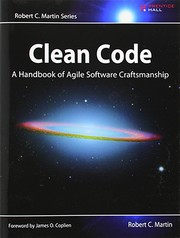 Clean CodeRobert C. Martin · 2008
 An introduction to computer scienceJean-Paul Tremblay, Richard B. Bunt · 1979
 Graphs, Networks and AlgorithmsDieter Jungnickel · 2006
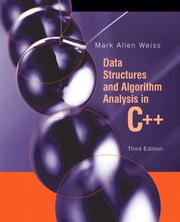 Data structures and algorithm analysis in CMark Allen Weiss · 1993
 An introduction to the analysis of algorithmsRobert Sedgewick, Philippe Flajolet · 1995
 Data structures & algorithm analysis in JavaMark Allen Weiss · 1999
 Mastering algorithms with CKyle Loudon, Andy Oram · 1999
 Data structures and algorithms in JavaAdam Drozdek · 2001
Ranked by number of editions on Open Library, a rough measure of how lasting a book is.
🔗 Related topics
- Outline of algorithms The following outline is provided as an overview of and topical guide to algorithms: An algorithm is a finite, well-defined sequence of instructions or…
- List of numerical analysis topics This is a list of numerical analysis topics. Validated numerics Iterative method Rate of convergence — the speed at which a convergent sequence approaches…
- Search algorithm In computer science, a search algorithm is an algorithm designed to solve a search problem. Search algorithms work to retrieve information stored within…
- Quantum algorithm In quantum computing, a quantum algorithm is an algorithm that runs on a realistic model of quantum computation, the most commonly used model being the…
- List of unsolved problems in computer science This article is a list of notable unsolved problems in computer science. A problem in computer science is considered unsolved when no solution is known…
- Time complexity In theoretical computer science, the time complexity is the computational complexity that describes the amount of computer time it takes to run an algorithm…
- Binary search In computer science, binary search, also known as half-interval search, logarithmic search, or binary chop, is a search algorithm that finds the position…
- SWIFFT In cryptography, SWIFFT is a collection of provably secure hash functions. It is based on the concept of the fast Fourier transform (FFT). SWIFFT is not…