Live briefing
Everything about Lisp (programming language)
Programming language family
Lisp is a family of programming languages with a long history and a distinctive, fully parenthesized prefix notation. Originally specified in the late 1950s, it is the second-oldest high-level programming language still in common use, after Fortran. Lisp has changed since its early days, and many dialects have existed over its history. Today, the best-known general-purpose Lisp dialects are Common Lisp, Scheme, Racket, and Clojure. Wikipedia →
🧭 Start here: a 6-step reading path
- Read the overview: Lisp (programming language)A 5-minute orientation
- Skim a recent paper: Using Metaprogramming Tools of the Common Lisp Language for the Development of Emulator SystemsInfluential work since 2022
- Pick up a classic book: Structure and Interpretation of Computer Programs (SICP)The most-reprinted book on the subject
- Read the landmark paper: LISP-A CAD System Programming LanguageCited 5 times
- Go sideways: Common LispA closely related topic
- Go sideways: MaclispA closely related topic
📖 Definitions
No dictionary entry for this exact phrase.
🗂️ The subject at a glance
🏆 Landmark papers (most cited)
LISP-A CAD System Programming Language
Lisp: An AI programming language
Lisp As a Programming Language for Laboratory Robotics
A small lisp interpreter as a project in a programming language course
An effective Lisp project for a programming languages course
The Programming Language LISP: Its Operation and Applications
The Programming Language LISP: Its Operation and Applications.
The programming language LISP: Its operation and applications
🆕 Influential since 2022
Using Metaprogramming Tools of the Common Lisp Language for the Development of Emulator Systems
Forms for Presenting the Results of Comparing Programming Languages Using the Example of Lisp Dialects
Forms for Displaying the Results of Comparison of Programming Languages using the Example of Dialects of the Lisp Language
📚 Books worth reading
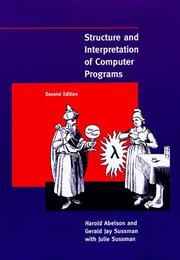 Structure and Interpretation of Computer Programs (SICP)Harold Abelson, Gerald Jay Sussman · 1985
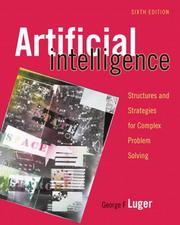 Artificial intelligenceGeorge F. Luger, LUGER · 1992
 Advanced lisp technologyTaiichi Yuasa · 2002
 Algorithms in C++Robert Sedgewick · 1990
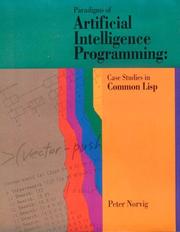 Paradigms of Artificial IntelligencePeter Norvig · 1991
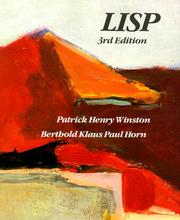 LISPPatrick Henry Winston · 1981
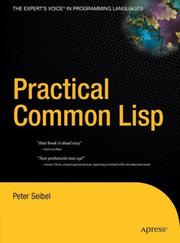 Practical Common LispPeter Seibel · 2005
 COMMON LISPGuy L. Steele Jr. · 1984
Ranked by number of editions on Open Library, a rough measure of how lasting a book is.
🔗 Related topics
- Common Lisp Common Lisp (CL) is a dialect of the Lisp programming language, published in American National Standards Institute (ANSI) standard document ANSI INCITS…
- Maclisp Maclisp (or MACLISP, sometimes styled MacLisp or MacLISP) is a programming language, a dialect of the language Lisp. It originated at the Massachusetts…
- Scheme (programming language) Scheme is a dialect of the Lisp family of programming languages. Scheme was created during the 1970s at the MIT Computer Science and Artificial Intelligence…
- Read–eval–print loop A read–eval–print loop (REPL), also termed an interactive toplevel or language shell, is a simple interactive computer programming environment that takes…
- Eval In some programming languages, eval, short for evaluate, is a function which evaluates a string as though it were an expression in the language, and returns…
- History of the Scheme programming language The history of the Scheme programming language begins with the development of earlier members of the Lisp family of languages during the second half of…
- Fexpr In Lisp programming languages, a fexpr is a function whose operands are passed to it without being evaluated. When a fexpr is called, only the body of…
- CAR and CDR In computer programming, CAR (car) /kɑːr/ and CDR (cdr) (/ˈkʌdər/ or /ˈkʊdər/) are primitive operations on cons cells (or "non-atomic S-expressions") introduced…