Everything about Linux Intrusion Detection System
Linux security patch
In computer security, the Linux Intrusion Detection System (LIDS) was a patch to the Linux kernel and associated administrative tools that enhanced the kernel's security by implementing mandatory access control (MAC). When LIDS was in effect all system network administration operations, chosen file access, any capability use, raw device, memory, and I/O access could be made impossible, even for root. One could define which programs can access specific files. It used and extended the system capabilities bounding set to control the whole system and added some network and filesystem security features to the kernel to enhance the security. One could finely tune the security protections online, hide sensitive processes, receive security alerts through the network, and more. LIDS supported Linux kernel 2.6, 2.4. LIDS was released under the terms of the GNU General Public License (GPL). Wikipedia →
🧭 Start here: a 6-step reading path
- Read the overview: Linux Intrusion Detection SystemA 5-minute orientation
- Skim a recent paper: Implementasi Intrusion Detection Prevention System Sebagai Sistem Keamanan Jaringan Komputer Kejaksaan Negeri Pariaman Menggunkan Snort Dan Iptables Berbasis LinuxInfluential work since 2022
- Pick up a classic book: Modern Operating SystemsThe most-reprinted book on the subject
- Read the landmark paper: Design and implementation of an intrusion detection system by using Extended BPF in the Linux kernelCited 38 times
- Go sideways: SELinuxA closely related topic
- Go sideways: AppArmorA closely related topic
📖 Definitions
No dictionary entry for this exact phrase.
🗂️ The subject at a glance
🏆 Landmark papers (most cited)
Design and implementation of an intrusion detection system by using Extended BPF in the Linux kernel
Advanced Persistent Threat (APT) and intrusion detection evaluation dataset for linux systems 2024
Implementasi Iptables Firewall dan Intrusion Detection System Untuk Mencegah Serangan DDoS Pada Linux Server
Enhancing host intrusion detection systems for Linux based network operating systems
Network Security using Linux Intrusion Detection System
Pemanfaatan IPTables Sebagai Intrusion Detection System (IDS) dan Intrusion Prevention System (IPS) Pada Linux Server
Post-Quantum Cryptographic Approach for Linux Kernel Module Used in Intrusion Detection System
Implementation of Intrusion Detection System and Traffic Analysis – A Case of a Linux Platform
🆕 Influential since 2022
📚 Books worth reading
 Modern Operating SystemsAndrew S. Tanenbaum, Herbert Bos · 1992
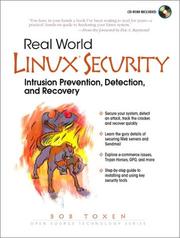 Real World Linux SecurityBob Toxen · 2000
 Kali Linux Intrusion and Exploitation CookbookIshan Girdhar, Dhruv Shah · 2017
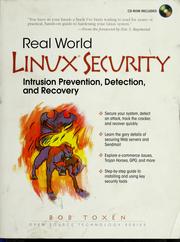 Real-world Linux securityBob Toxen · 2001
 Intrusion Detection fu r Linux-ServerRalf Spenneberg · 2003
 Maximum Linux securityAnonymous · 2000
 Computer and information security handbookJohn R. Vacca · 2009
Ranked by number of editions on Open Library, a rough measure of how lasting a book is.
🔗 Related topics
- SELinux Security-Enhanced Linux (SELinux) is a Linux kernel security module that provides a mechanism for supporting access control security policies, including…
- AppArmor AppArmor ("Application Armor") is a Linux kernel security module that allows system administrators to restrict programs' capabilities with per-program…
- Linux Security Modules Linux Security Modules (LSM) is a framework allowing the Linux kernel to support, without bias, a variety of computer security models. LSM is licensed…
- Tomoyo Linux Tomoyo Linux (stylised as TOMOYO Linux) is a Linux kernel security module which implements mandatory access control (MAC). Tomoyo Linux is a MAC implementation…
- Mandatory access control In computer security, mandatory access control (MAC) refers to a type of access control by which a secured environment (e.g., an operating system or a…
- Smack (software) Smack (full name: Simplified Mandatory Access Control Kernel) is a Linux kernel security module that protects data and process interaction from malicious…
- RSBAC RSBAC (Rule Set Based Access Control) is a free and open-source (GNU GPL) Linux kernel patch, focused on security. It extends security checks made by the…
- Netfilter Netfilter is a framework provided by the Linux kernel that allows various networking-related operations to be implemented in the form of customized handlers…