Live briefing
Everything about Linearized gravity
Linear perturbations to solutions of nonlinear Einstein field equations
In the theory of general relativity, linearized gravity is the application of perturbation theory to the metric tensor that describes the geometry of spacetime. As a consequence, linearized gravity is an effective method for modeling the effects of gravity when the gravitational field is weak. The usage of linearized gravity is integral to the study of gravitational waves and weak-field gravitational lensing. Wikipedia →
🧭 Start here: a 6-step reading path
- Read the overview: Linearized gravityA 5-minute orientation
- Skim a recent paper: Gauging Fractons and Linearized GravityInfluential work since 2022
- Pick up a classic book: Physical principles of sedimentary basin analysisThe most-reprinted book on the subject
- Read the landmark paper: On the non-linear energy transfer in a gravity-wave spectrum Part 1. General theoryCited 1,246 times
- Go sideways: Einstein field equationsA closely related topic
- Go sideways: F(R) gravityA closely related topic
📖 Definitions
No dictionary entry for this exact phrase.
🗂️ The subject at a glance
🏆 Landmark papers (most cited)
On the non-linear energy transfer in a gravity-wave spectrum Part 1. General theory
Linearized gravity in brane backgrounds
Metric preheating and limitations of linearized gravity
Duality in linearized gravity
Locally Mediated Entanglement in Linearized Quantum Gravity
Factorization and polarization in linearized gravity
Lorentz violation in the linearized gravity
Lorentz and diffeomorphism violations in linearized gravity
🆕 Influential since 2022
Gauging Fractons and Linearized Gravity
Nontensorial gravitational wave polarizations from the tensorial degrees of freedom: Linearized Lorentz-violating theory of gravity
Signatures of linearized gravity in atom interferometers: A simplified computational framework
The case against smooth null infinity IV: Linearized gravity around Schwarzschild—an overview
Non-minimal coupling of scalar and gauge fields with gravity: an entropy current and linearized second law
📚 Books worth reading
 Physical principles of sedimentary basin analysisMagnus Wangen · 2006
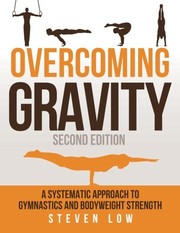 Overcoming GravitySteven Low · 2011
 KinesiologyNancy Hamilton, Nancy Hamilton · 2002
- 📕Lunar gravimetryRune Floberghagen · 2002
- 📕SAKIMichael Webring · 1985
 The Solution of the inverse problem in geophysical interpretationR. Cassinis · 1981
 Gravity-capillary Free Surface Flows (Cambridge Monographs on Mechanics)Jean-Marc Vanden-Broeck, J.-M Vanden-Broeck · 2008
 Touch this!Paul G. Hewitt · 2001
Ranked by number of editions on Open Library, a rough measure of how lasting a book is.
🔗 Related topics
- Einstein field equations In the general theory of relativity, the Einstein field equations (EFE; also known as Einstein's equations) relate the geometry of spacetime to the distribution…
- F(R) gravity In physics, f(R) is a type of modified gravity theory which generalizes Einstein's general relativity. f(R) gravity is actually a family of theories, each…
- Metric tensor (general relativity) In general relativity, the metric tensor (in this context often abbreviated to simply the metric) is the fundamental object of study. The metric captures…
- Stress–energy tensor Wikiversity has learning resources about Gravitational stress-energy tensor The stress–energy tensor, sometimes called the stress–energy–momentum tensor…
- Source field In theoretical physics, a source is an abstract concept, developed by Julian Schwinger, motivated by the physical effects of surrounding particles involved…
- Massive gravity In theoretical physics, massive gravity is a theory of gravity that modifies general relativity by endowing the graviton with a nonzero mass. In the classical…
- Four-gradient In differential geometry, the four-gradient (or 4-gradient) 𝝏 is the four-vector analogue of the gradient 𝜵→ from vector calculus. In special relativity…
- Lagrangian (field theory) Lagrangian field theory is a formalism in classical field theory. It is the field-theoretic analogue of Lagrangian mechanics. Lagrangian mechanics is used…