Live briefing
Everything about Linear probability model
Statistics model
In statistics, a linear probability model (LPM) is a special case of a binary regression model. Here the dependent variable for each observation takes values which are either 0 or 1. The probability of observing a 0 or 1 in any one case is treated as depending on one or more explanatory variables. For the "linear probability model", this relationship is a particularly simple one, and allows the model to be fitted by linear regression. Wikipedia →
🧭 Start here: a 6-step reading path
- Read the overview: Linear probability modelA 5-minute orientation
- Skim a recent paper: Robust Data-Driven Linear Power Flow Model With Probability Constrained Worst-Case ErrorsInfluential work since 2022
- Pick up a classic book: A first course in linear model theoryThe most-reprinted book on the subject
- Read the landmark paper: PRACTITIONERS CORNER: An Advantage of the Linear Probability Model over Probit or LogitCited 144 times
- Go sideways: Binomial regressionA closely related topic
- Go sideways: Multinomial logistic regressionA closely related topic
📖 Definitions
No dictionary entry for this exact phrase.
🗂️ The subject at a glance
🏆 Landmark papers (most cited)
PRACTITIONERS CORNER: An Advantage of the Linear Probability Model over Probit or Logit
A Simultaneous Equations Linear Probability Model
A Linear Model for Dynamic Generation Expansion Planning Considering Loss of Load Probability
Hubbard model for a disordered linear chain: Probability distribution of exchange
Cell-survival probability at large doses: an alternative to the linear-quadratic model
On the linear in probability model for binary data
Some implications of the linear quadratic model for tumor control probability
Comparing linear probability model coefficients across groups
🆕 Influential since 2022
Robust Data-Driven Linear Power Flow Model With Probability Constrained Worst-Case Errors
Linear Probability Model Revisited: Why It Works and How It Should Be Specified
Fast Optimal Subsampling Probability Approximation for Generalized Linear Models
On the Linear Probability Model as binary choice random utility model
Minimal Constraint Violation Probability in Model Predictive Control for Linear Systems
📚 Books worth reading
 A first course in linear model theoryNalini Ravishanker, Dipak K. Dey · 2001
 Applied Linear RegressionSanford Weisberg · 2005
 Linear Mixed ModelsBrady T. West, Kathleen B. Welch · 2006
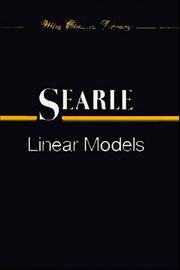 Linear ModelsShayle R. Searle · 1997
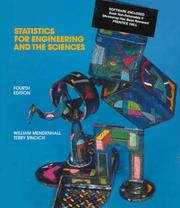 Statistics for engineering and the sciencesWilliam Mendenhall, Terry Sincich · 1991
 Higher-Order Growth Curves and Mixture Modeling with MplusKandauda A. S. Wickrama, Tae Lee · 2016
 Generalized linear models with random effectsYoungjo Lee · 2006
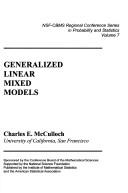 Generalized, linear, and mixed modelsCharles E. McCulloch, Shayle R. Searle · 2003
Ranked by number of editions on Open Library, a rough measure of how lasting a book is.
🔗 Related topics
- Binomial regression In statistics, binomial regression is a regression analysis technique in which the response (often referred to as Y) has a binomial distribution: it is…
- Multinomial logistic regression In statistics, multinomial logistic regression is a classification method that generalizes logistic regression to multiclass problems, i.e. with more than…
- Multivariate probit model In statistics and econometrics, the multivariate probit model is a generalization of the probit model used to estimate several correlated binary outcomes…
- Heteroskedasticity-consistent standard errors The topic of heteroskedasticity-consistent (HC) standard errors arises in statistics and econometrics in the context of linear regression and time series…
- Multinomial probit In statistics and econometrics, the multinomial probit model is a generalization of the probit model used when there are several possible categories that…
- Ordered logit In statistics, the ordered logit model or proportional odds logistic regression is an ordinal regression model—that is, a regression model for ordinal…
- Working–Hotelling procedure In statistics, particularly regression analysis, the Working–Hotelling procedure, named after Holbrook Working and Harold Hotelling, is a method of simultaneous…
- Gauss–Markov theorem In statistics, the Gauss–Markov theorem (or simply Gauss theorem for some authors) states that, under certain conditions, the ordinary least squares (OLS)…