Live briefing

Everything about Library (computing)
Collection of resources used to develop a computer program
In computing, a library is a collection of resources that can be used during software development to implement a computer program. Commonly, a library consists of executable code such as compiled functions and classes, or a library can be a collection of source code. A resource library may contain data such as images and text. Wikipedia →
🧭 Start here: a 6-step reading path
- Read the overview: Library (computing)A 5-minute orientation
- Skim a recent paper: DendroPy 5: a mature Python library for phylogenetic computingInfluential work since 2022
- Pick up a classic book: The Autobiography of Benjamin FranklinThe most-reprinted book on the subject
- Read the landmark paper: cclib: A library for package‐independent computational chemistry algorithmsCited 6,052 times
- Go sideways: Dynamic loadingA closely related topic
- Go sideways: Static libraryA closely related topic
📖 Definitions
No dictionary entry for this exact phrase.
🗂️ The subject at a glance
🏆 Landmark papers (most cited)
cclib: A library for package‐independent computational chemistry algorithms
DendroPy: a Python library for phylogenetic computing
Computing similarity in a reuse library system
Quantum++: A modern C++ quantum computing library
FlexFloat: A Software Library for Transprecision Computing
“Cloud computing” in library automation: benefits and drawbacks
A lightweight communication library for distributed computing
Digital library services in mobile computing
🆕 Influential since 2022
DendroPy 5: a mature Python library for phylogenetic computing
IMAGIN: Library of IMPLY and MAGIC NOR-Based Approximate Adders for In-Memory Computing
EnosLib: A Library for Experiment-Driven Research in Distributed Computing
Cloud computing applications in library services of Bangladesh: a study on librarians’ perceptions
A 65 nm CMOS Analog Programmable Standard Cell Library for Mixed-Signal Computing
📚 Books worth reading
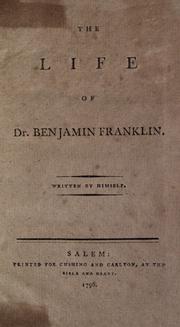 The Autobiography of Benjamin FranklinBenjamin Franklin · 1791
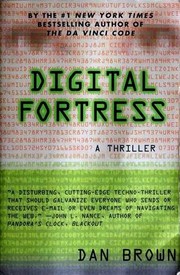 Digital FortressDan Brown · 1998
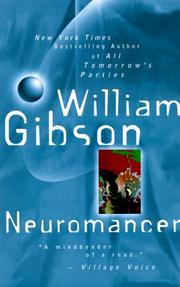 NeuromancerWilliam Gibson · 1984
 Everything's Eventual. 14 Dark TalesStephen King · 2002
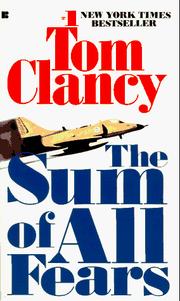 The Sum of All FearsTom Clancy · 1991
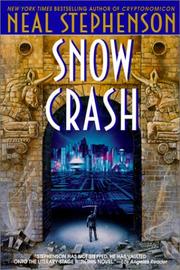 Snow CrashNeal Stephenson · 1992
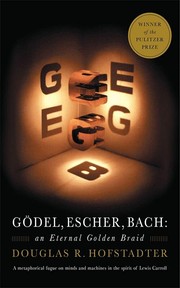 Gödel, Escher, BachDouglas R. Hofstadter · 1979
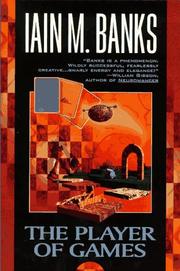 The player of gamesIain Banks · 1988
Ranked by number of editions on Open Library, a rough measure of how lasting a book is.
🔗 Related topics
- Dynamic loading Dynamic loading is a mechanism by which a computer program can, at run time, load a library (or other binary) into memory, retrieve the addresses of functions…
- Static library A static library or statically linked library contains functions and data that can be included in a consuming computer program at build-time such that…
- DLL hell DLL hell is an umbrella term for the complications that arise when one works with dynamic-link libraries (DLLs) used with older Microsoft Windows operating…
- Late binding Late binding is the act or mechanism of binding two software entities at runtime as opposed to early binding which occurs before the program starts – such…
- Linker (computing) A linker or link editor is a computer program that combines intermediate software build files such as object and library files into a single executable…
- Dynamic linker A dynamic linker is an operating system feature that loads and links dynamic libraries for an executable at runtime, before or while it is running. Although…
- Dynamic library A dynamic library is a library that contains functions and data that can be used by a computer program at run-time as loaded from a file separate from…
- Inversion of control In software design, inversion of control (IoC) is a design principle in which custom-written portions of a computer program receive the flow of control…