Live briefing

Everything about Level-set method
Conceptual framework used in numerical analysis of surfaces and shapes
The Level-set method (LSM) is a conceptual framework for using level sets as a tool for numerical analysis of surfaces and shapes. LSM can perform numerical computations involving curves and surfaces on a fixed Cartesian grid without having to parameterize these objects. LSM makes it easier to perform computations on shapes with sharp corners and shapes that change topology. These characteristics make LSM effective for modeling objects that vary in time, such as an airbag inflating or a drop of oil floating in water. Wikipedia →
🧭 Start here: a 6-step reading path
- Read the overview: Level-set methodA 5-minute orientation
- Skim a recent paper: A GPU-Enabled Level-Set Method for Mask OptimizationInfluential work since 2022
- Pick up a classic book: Level set methods and dynamic implicit surfacesThe most-reprinted book on the subject
- Read the landmark paper: A level set method for structural topology optimizationCited 2,977 times
- Go sideways: Kansa methodA closely related topic
- Go sideways: Finite volume method for two dimensional diffusion problemA closely related topic
📖 Definitions
No dictionary entry for this exact phrase.
🗂️ The subject at a glance
🏆 Landmark papers (most cited)
A level set method for structural topology optimization
A PDE-Based Fast Local Level Set Method
A level-set method for shape optimization
A Lagrangian particle level set method
A level set method for inverse problems
Modeling Superconformal Electrodeposition Using The Level Set Method
A level set method for dislocation dynamics
Evolutionary level set method for structural topology optimization
🆕 Influential since 2022
A GPU-Enabled Level-Set Method for Mask Optimization
Applications of level set method in computational fluid dynamics: a review
Multi-material topology optimization of coated structures using level set method
Simulation of Continuous Dynamic Recrystallization Using a Level-Set Method
A particle finite element method based on Level–Set functions
📚 Books worth reading
 Level set methods and dynamic implicit surfacesStanley Osher, Stanley J. Osher · 2002
 Level set methodsJames Albert Sethian · 1996
 Learner-Centered TeachingMaryellen Weimer · 2013
- 📕Flat level set regularity of p-Laplace phase transitionsEnrico Valdinoci · 2006
 Level sets and extrema of random processes and fieldsJean-Marc Azaïs · 2009
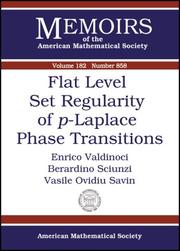 Flat level set regularity of p-Laplace phase transitionsEnrico Valdinoci, Berardino Sciunzi · 2006
 Level set methods and fast marching methodsJames Albert Sethian · 1999
 Rearrangements and convexity of level sets in PDEBernhard Kawohl · 1985
Ranked by number of editions on Open Library, a rough measure of how lasting a book is.
🔗 Related topics
- Kansa method The Kansa method (also known as the unsymmetric radial basis function collocation method) is a meshless numerical method for solving partial differential…
- Finite volume method for two dimensional diffusion problem The methods used for solving two dimensional Diffusion problems are similar to those used for one dimensional problems. The general equation for steady…
- Godunov's theorem In numerical analysis and computational fluid dynamics, Godunov's theorem — also known as Godunov's order barrier theorem — is a mathematical theorem important…
- Geometrical optics Geometrical optics, or ray optics, is a model of optics that describes light propagation in terms of rays. The ray in geometrical optics is an abstraction…
- Finite volume method for three-dimensional diffusion problem Finite volume method (FVM) is a numerical method. FVM in computational fluid dynamics is used to solve the partial differential equation which arises from…
- Finite volume method for one-dimensional steady state diffusion The Finite volume method in computational fluid dynamics is a discretization technique for partial differential equations that arise from physical conservation…
- Arc length Arc length is the length of a curve from beginning to end. Conceptually, if we imagined the curve as a string, the arc length is how long the string would…
- Fictitious domain method In numerical analysis, the fictitious domain method (FD) is a numerical technique designed to solve partial differential equations on complex geometries…