Live briefing
Everything about Left recursion
Theory of computer sciences
In the formal language theory of computer science, left recursion is a special case of recursion where a string is recognized as part of a language by the fact that it decomposes into a string from that same language and a suffix. For instance, can be recognized as a sum because it can be broken into, also a sum, and, a suitable suffix. Wikipedia →
🧭 Start here: a 6-step reading path
- Read the overview: Left recursionA 5-minute orientation
- Skim a recent paper: On Removing Left Recursion from Totally-ordered HTN Domain ModelsInfluential work since 2022
- Pick up a classic book: Languages and machinesThe most-reprinted book on the subject
- Read the landmark paper: Left recursion in Parsing Expression GrammarsCited 15 times
- Go sideways: Parsing expression grammarA closely related topic
- Go sideways: Recursive descent parserA closely related topic
📖 Definitions
Noun The case in which a string (in a language) may be decomposed to another string and a suffix
🗂️ The subject at a glance
🏆 Landmark papers (most cited)
Left recursion in Parsing Expression Grammars
On top-to-bottom recognition and left recursion
A new top-down parsing algorithm to accommodate ambiguity and left recursion in polynomial time
Semantics-preserving Migration of Semantic Rules During Left Recursion Removal in Attribute Grammars
Recursion introduces a left-branching bias (where possible)
Strictly orthogonal left linear rewrite systems and primitive recursion
Implementation of Left Recursion using C Language
Context-Free Grammars Including Left Recursion using Recursive miniKanren
🆕 Influential since 2022
📚 Books worth reading
 Languages and machinesThomas A. Sudkamp · 1988
 Introduction to C ProgrammingReema Thareja · 2013
 Data structures using C++D. S. Malik · 2010
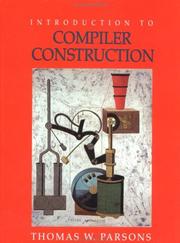 Introduction to compiler constructionParsons, Thomas W. · 1992
 Do you think this is strange?Aaron Cully Drake · 2015
 The New Binary Press anthology of poetryAdam Rudden · 2012
 The Human Planet · 2009
Ranked by number of editions on Open Library, a rough measure of how lasting a book is.
🔗 Related topics
- Parsing expression grammar In computer science, a parsing expression grammar (PEG) is a type of analytic formal grammar, i.e. it describes a formal language in terms of a set of…
- Recursive descent parser In computer science, a recursive descent parser is a kind of top-down parser built from a set of mutually recursive procedures (or a non-recursive equivalent)…
- Parser combinator In computer programming, a parser combinator is a higher-order function that accepts several parsers as input and returns a new parser as its output. In…
- Top-down parsing Top-down parsing in computer science is a parsing strategy where one first looks at the highest level of the parse tree and works down the parse tree by…
- Top-down parsing language Top-Down Parsing Language (TDPL) is a type of analytic formal grammar developed by Alexander Birman in the early 1970s in order to study formally the behavior…
- Context-free grammar In formal language theory, a context-free grammar (CFG) is a formal grammar whose production rules can be applied to a nonterminal symbol regardless of…
- LL parser In computer science, an LL parser is a top-down parser for a restricted context-free language. It parses the input from Left to right, performing Leftmost…
- Formal grammar A formal grammar is a set of symbols and the production rules for rewriting some of them into every possible string of a formal language over an alphabet…