Everything about Learning engineering
Interdisciplinary academic field

Learning Engineering is the systematic application of evidence-based principles and methods from educational technology and the learning sciences to create engaging and effective learning experiences, support the difficulties and challenges of learners as they learn, and come to better understand learners and learning. It emphasizes the use of a human-centered design approach in conjunction with analyses of rich data sets to iteratively develop and improve those designs to address specific learning needs, opportunities, and problems, often with the help of technology. Working with subject-matter and other experts, the Learning Engineer deftly combines knowledge, tools, and techniques from a variety of technical, pedagogical, empirical, and design-based disciplines to create effective and engaging learning experiences and environments and to evaluate the resulting outcomes. While doing so, the Learning Engineer strives to generate processes and theories that afford generalization of best practices, along with new tools and infrastructures that empower others to create their own learning designs based on those best practices. Wikipedia →
🧭 Start here: a 6-step reading path
- Read the overview: Learning engineeringA 5-minute orientation
- Skim a recent paper: Machine learning-aided engineering of hydrolases for PET depolymerizationInfluential work since 2022
- Pick up a classic book: LeonardoThe most-reprinted book on the subject
- Read the landmark paper: Active learning increases student performance in science, engineering, and mathematicsCited 7,410 times
- Go sideways: Kenneth KoedingerA closely related topic
- Go sideways: E-learning (theory)A closely related topic
📖 Definitions
No dictionary entry for this exact phrase.
🏆 Landmark papers (most cited)
Active learning increases student performance in science, engineering, and mathematics
Machine Learning in Enzyme Engineering
Situated Engineering Learning: Bridging Engineering Education Research and the Learning Sciences
Machine Learning-Guided Protein Engineering
Perceptron Learning in Engineering Design
Machine learning in biomedical engineering
Machine Learning and Software Engineering
Machine Learning in Tissue Engineering
🆕 Influential since 2022
📚 Books worth reading
 LeonardoCarlo Pedretti · 1973
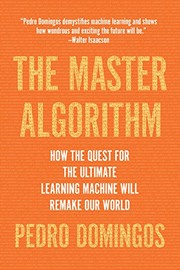 The Master AlgorithmPedro Domingos · 2015
 Intelligent Sensor NetworksFei Hu, Qi Hao · 2012
 Genius MakersCade Metz · 2021
 Thinking like an engineerElizabeth A. Stephan · 2012
 From Curve Fitting to Machine LearningAchim Zielesny · 2011
- 📕Soil Mechanics Through Project-Based LearningIvan Gratchev, Dong-Sheng Jeng · 2018
 Reinforcement and systemic machine learning for decision makingParag Kulkarni · 2012
Ranked by number of editions on Open Library, a rough measure of how lasting a book is.
🔗 Related topics
- Kenneth Koedinger Kenneth R. Koedinger (born 1962) is an American cognitive scientist and computer scientist who is the Hillman University Professor of Computer Science…
- E-learning (theory) E-learning theory describes the cognitive science principles of effective multimedia learning using electronic educational technology. In recent applications…
- Gamification of learning The gamification of learning is an educational technology approach that seeks to motivate students by using video game design and game elements in learning…
- Educational data mining Educational data mining (EDM) is a research field concerned with the application of data mining, machine learning and statistics to information generated…
- Open education Open education is an international learning standards and education policy open standards movement based on open source openness. It was created inspired…
- Instructional design Instructional design (ID), also known as instructional systems design and originally known as instructional systems development (ISD), is the practice…
- Evidence-based education Evidence-based education (EBE) is the principle that education practices should be based on the best available scientific evidence, with randomised trials…
- Educational technology Educational technology (often abbreviated as edtech) encompasses computer hardware, software, along with educational theories and practices, used to facilitate…