Live briefing
Everything about Lazy initialization
Delay of a task until it is first needed
In computer programming, lazy initialization is the tactic of delaying the creation of an object, the calculation of a value, or some other expensive process until the first time it is needed. It is a kind of lazy evaluation that refers specifically to the instantiation of objects or other resources. Wikipedia →
🧭 Start here: a 6-step reading path
- Read the overview: Lazy initializationA 5-minute orientation
- Pick up a classic book: Code CompleteThe most-reprinted book on the subject
- Read the landmark paper: BLISS: Improved Symbolic Execution by\\ Bounded Lazy Initialization with SAT SupportCited 20 times
- Go sideways: Entry pointA closely related topic
- Go sideways: C++ syntaxA closely related topic
📖 Definitions
Noun Alternative spelling of lazy initialisation.
🗂️ The subject at a glance
🏆 Landmark papers (most cited)
📚 Books worth reading
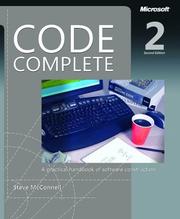 Code CompleteSteve McConnell · 1993
 Learning JavaScript Design PatternAddy Osmani · 2012
 Open GovernmentDaniel Lathrop · 2010
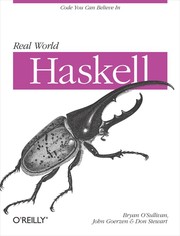 Real World HaskellBryan O'Sullivan, John Goerzen · 2008
 Learn Objective-C for Java developersJames Bucanek · 2009
 The Art Of OS/2 Warp ProgrammingKatheleen Panov, Larry Salomon Jr., Arthur Panov · 1995
 The Door To EnlightenmentJames Stewart · 2006
 Angular 2 Development with TypeScriptYakov Fain, Anton Moiseev · 2017
Ranked by number of editions on Open Library, a rough measure of how lasting a book is.
🔗 Related topics
- Entry point In computer programming, an entry point is the place in a program where the execution of a program begins, and where the program has access to command…
- C++ syntax The syntax of C++ is the set of rules defining how a C++ program is written and compiled. C++ syntax is largely inherited from the syntax of its ancestor…
- Flyweight pattern In computer programming, the flyweight software design pattern refers to an object that minimizes memory usage by sharing some of its data with other similar…
- Destructor (computer programming) In object-oriented programming, a destructor (sometimes abbreviated dtor) is a method which is invoked mechanically just before the memory of the object…
- Variadic template In computer programming, variadic templates or variation generics are templates that take a variable number of type parameters. They exist in several programmin…
- Type introspection In computing, type introspection is the ability of a program to examine the type or properties of an object at runtime. Some programming languages possess…
- Singleton pattern In object-oriented programming, the singleton pattern is a software design pattern that restricts the instantiation of a class to a singular instance.…
- Reflective programming In computer science, reflective programming or reflection is the ability of a process to examine, introspect, and modify its own structure and behavior…