Live briefing

Everything about Language processing in the brain
How humans use words to communicate
In psycholinguistics, language processing refers to the way humans use words to communicate ideas and feelings, and how such communications are processed and understood. Language processing is considered to be a uniquely human ability that is not produced with the same grammatical understanding or systematicity in even humans' closest primate relatives. Wikipedia →
🧭 Start here: a 6-step reading path
- Read the overview: Language processing in the brainA 5-minute orientation
- Skim a recent paper: Temporal structure of natural language processing in the human brain corresponds to layered hierarchy of large language modelsInfluential work since 2022
- Pick up a classic book: Social cognitionThe most-reprinted book on the subject
- Read the landmark paper: The Brain Basis of Language Processing: From Structure to FunctionCited 1,752 times
- Go sideways: Superior temporal gyrusA closely related topic
- Go sideways: Transverse temporal gyrusA closely related topic
📖 Definitions
No dictionary entry for this exact phrase.
🏆 Landmark papers (most cited)
The Brain Basis of Language Processing: From Structure to Function
Brain signatures of artificial language processing: Evidence challenging the critical period hypothesis
Pitch processing in the human brain is influenced by language experience
Brain drain: The cognitive neuroscience of foreign language processing in multinational corporations
Language-specific activations in the brain: Evidence from inflectional processing in bilinguals
Neurolinguistic processing when the brain matures without language
Complementary hemispheric lateralization of language and social processing in the human brain
Non-invasive brain stimulation and language processing in the healthy brain
🆕 Influential since 2022
Temporal structure of natural language processing in the human brain corresponds to layered hierarchy of large language models
Increasing alignment of large language models with language processing in the human brain
Cognitive Computational Neuroscience of Language: Using Computational Models to Investigate Language Processing in the Brain
Sign and Spoken Language Processing Differences in the Brain: A Brief Review of Recent Research
Personalized neuroimaging reveals the impact of children’s interests on language processing in the brain
📚 Books worth reading
 Social cognitionSusan T. Fiske, Shelley E. Taylor · 1984
 Born to talkLloyd M. Hulit, Merle R. Howard · 1992
 Natural religionF. Max Müller · 1888
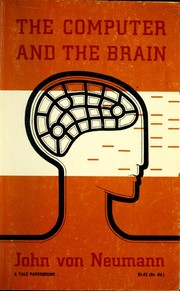 The Computer and the BrainJohn von Neumann · 1958
 Teaching with the brain in mindEric Jensen · 1998
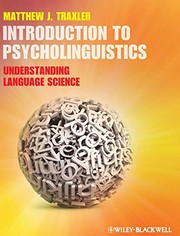 Introduction to psycholinguisticsMatthew J. Traxler · 2011
 Technical Analysis Plain & SimpleMichael N. Kahn · 1999
 Higher level language processes in the brainF. Schmalhofer, Charles A. Perfetti · 2007
Ranked by number of editions on Open Library, a rough measure of how lasting a book is.
🔗 Related topics
- Superior temporal gyrus The superior temporal gyrus (STG) is one of three (sometimes two) gyri in the temporal lobe of the human brain, which is located laterally to the head…
- Transverse temporal gyrus The transverse temporal gyrus, also called Heschl's gyrus (/ˈhɛʃəlz ˈdʒaɪrəs/) or Heschl's convolutions, is a gyrus found in the area of each primary auditory…
- Inferior frontal gyrus The inferior frontal gyrus (IFG; also gyrus frontalis inferior) is the lowest positioned gyrus of the frontal gyri, of the frontal lobe, and is part of…
- Neuroscience of music The neuroscience of music is the scientific study of brain-based mechanisms involved in the cognitive processes underlying music. These behaviours include…
- Superior temporal sulcus The superior temporal sulcus (STS) is the sulcus separating the superior temporal gyrus from the middle temporal gyrus, in the temporal lobe of the mammalian…
- Conduction aphasia Conduction aphasia, also called associative aphasia, is an acquired language disorder, most commonly caused by left-hemisphere cerebrovascular injury.…
- Auditory cortex The auditory cortex is the part of the temporal lobe that processes auditory information in humans and many other vertebrates. It is a part of the auditory…
- Auditory agnosia Auditory agnosia is a form of agnosia that manifests itself primarily in the inability to recognize or differentiate between sounds. It is not a defect…