Live briefing

Everything about Kinase
Enzyme catalyzing transfer of phosphate groups onto specific substrates
In biochemistry, a kinase is a protein enzyme that catalyzes the transfer of phosphate groups to substrates. This process is known as phosphorylation. Typically ATP is the phosphate donor. Kinases are pervasive, the human genome codes for about 500 of these enzymes. Wikipedia →
🧭 Start here: a 6-step reading path
- Read the overview: KinaseA 5-minute orientation
- Skim a recent paper: Mitogen‐activated protein kinase cascades in plant signalingInfluential work since 2022
- Pick up a classic book: Phosphoinositide 3-kinase in Health and DiseaseThe most-reprinted book on the subject
- Read the landmark paper: The Protein Kinase Complement of the Human GenomeCited 7,368 times
- Go sideways: Protein phosphorylationA closely related topic
- Go sideways: Protein phosphataseA closely related topic
📖 Definitions
Noun Any of a group of enzymes that transfer phosphate groups from high-energy donor molecules, such as ATP, to specific target molecules (substrates), in a process termed phosphorylation.
🏆 Landmark papers (most cited)
The Protein Kinase Complement of the Human Genome
The role of protein kinase C in cell surface signal transduction and tumour promotion
Specificity and mechanism of action of some commonly used protein kinase inhibitors
The phosphatidylinositol 3-Kinase–AKT pathway in human cancer
Role of AMP-activated protein kinase in mechanism of metformin action
The Phosphoinositide 3-Kinase Pathway
Mammalian MAP kinase signalling cascades
Inhibition of glycogen synthase kinase-3 by insulin mediated by protein kinase B
🆕 Influential since 2022
Mitogen‐activated protein kinase cascades in plant signaling
Adverse effects of tyrosine kinase inhibitors in cancer therapy: pathophysiology, mechanisms and clinical management
Janus kinase-targeting therapies in rheumatology: a mechanisms-based approach
Properties of FDA-approved small molecule protein kinase inhibitors: A 2024 update
Protein tyrosine kinase inhibitor resistance in malignant tumors: molecular mechanisms and future perspective
📚 Books worth reading
 Phosphoinositide 3-kinase in Health and DiseaseChristian Rommel · 2010
 Receptor Tyrosine KinasesDeric L. Wheeler, Yosef Yarden · 2014
- 📕Peptides and Protein PhosphorylationB. E. Kemp · 2017
- 📕Protein kinase CK2Lorenzo A. Pinna · 2012
 Protein kinase factsbookD. G. Hardie, Grahame Hardie · 1995
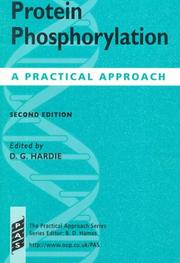 Protein PhosphorylationD. G. Hardie · 1999
 Protein Kinases (Frontiers in Molecular Biology)James Robert Woodgett · 1994
- 📕Cellular bioenergeticsV. A. Saks, Renée Ventura-Clapier · 1994
Ranked by number of editions on Open Library, a rough measure of how lasting a book is.
🔗 Related topics
- Protein phosphorylation Protein phosphorylation is a reversible post-translational modification of proteins in which an amino acid residue is phosphorylated by a protein kinase…
- Protein phosphatase A protein phosphatase is a phosphatase enzyme that removes a phosphate group from the phosphorylated amino acid residue of its substrate protein. Protein…
- Lipid signaling Lipid signaling, broadly defined, refers to any biological cell signaling event involving a lipid messenger that binds a protein target, such as a receptor…
- Non-receptor tyrosine kinase A non-receptor tyrosine kinase (nRTK) is a cytosolic enzyme that is responsible for catalysing the transfer of a phosphate group from a nucleoside triphosphate…
- Akt/PKB signaling pathway The Akt signaling pathway or PI3K-Akt signaling pathway is a signal transduction pathway that promotes survival and growth in response to extracellular…
- Glycogen phosphorylase A glycogen phosphorylase (EC 2.4.1.1) is a type of phosphorylase enzyme. Glycogen phosphorylases break down glycogen, in particular catalyzing the rate-limiting…
- Dephosphorylation In biochemistry, dephosphorylation is the removal of a phosphate (PO3−4) group from an organic compound by hydrolysis. It is a reversible post-translational…
- MAPK/ERK pathway The MAPK/ERK pathway (also known as the Ras-Raf-MEK-ERK pathway) is a chain of proteins in the cell that communicates a signal from a receptor on the surface…