Everything about Public-key cryptography
Cryptographic system with public and private keys

Public-key cryptography, or asymmetric cryptography, is the field of cryptographic systems that use pairs of related keys. Each key pair consists of a public key and a corresponding private key. Key pairs are generated with algorithms based on mathematical problems termed one-way functions. Security of public-key cryptography depends on keeping the private key secret; the public key can be openly distributed without compromising security. There are many kinds of public-key cryptosystems, with different security goals, including digital signature, Diffie–Hellman key exchange, public-key key encapsulation, and public-key encryption. Wikipedia →
🧭 Start here: a 6-step reading path
- Read the overview: Public-key cryptographyA 5-minute orientation
- Skim a recent paper: Resilience Optimization of Post-Quantum Cryptography Key Encapsulation AlgorithmsInfluential work since 2022
- Pick up a classic book: Introduction to Certificateless CryptographyThe most-reprinted book on the subject
- Read the landmark paper: A method for obtaining digital signatures and public-key cryptosystemsCited 12,277 times
- Go sideways: Key exchangeA closely related topic
- Go sideways: ElGamal encryptionA closely related topic
📖 Definitions
No dictionary entry for this exact phrase.
🗂️ The subject at a glance
🏆 Landmark papers (most cited)
A method for obtaining digital signatures and public-key cryptosystems
A public key cryptosystem and a signature scheme based on discrete logarithms
Quantum cryptography: Public key distribution and coin tossing
Quantum cryptography beyond quantum key distribution
Discrete chaotic cryptography using external key
Public-key cryptography and password protocols
An overview of public key cryptography
Quantum Cryptography: Key Distribution and Beyond
🆕 Influential since 2022
Resilience Optimization of Post-Quantum Cryptography Key Encapsulation Algorithms
Quantum cryptography beyond key distribution: Theory and experiment
A comprehensive survey of cryptography key management systems
Experimental composable key distribution using discrete-modulated continuous variable quantum cryptography
Public-Key Cryptography Based on Tropical Circular Matrices
📚 Books worth reading
 Introduction to Certificateless CryptographyHu Xiong · 2016
 Beginning Cryptography with JavaDavid Hook · 2005
- 📕Public-key cryptographyJames Nechvatal · 1991
 Internet SecurityMan Young Rhee · 2003
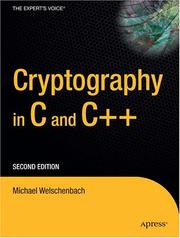 Kryptographie in C und C++Michael Welschenbach · 2001
 Cryptography and Public Key Infrastructure on the InternetKlaus Schmeh · 2003
- 📕Federal agency use of public key technology for digital signatures and authenticationKathy Lyons-Burke · 2000
 Access control, authentication, and public key infrastructureBill Ballad · 2011
Ranked by number of editions on Open Library, a rough measure of how lasting a book is.
🔗 Related topics
- Key exchange Key exchange (also key establishment) is a method in cryptography by which cryptographic keys are exchanged between two parties, allowing use of a cryptographic…
- ElGamal encryption In cryptography, the ElGamal encryption system is a public-key encryption algorithm based on the Diffie–Hellman key exchange. It was described by Taher…
- Cryptography Cryptography, or cryptology, is the practice and study of techniques for secure communication in the presence of adversarial behavior. More generally,…
- Key authentication Key/Config-authentication is used to solve the problem of authenticating the keys of a person (say "person A") that some other person ("person B") is talking…
- Index of cryptography articles Articles related to cryptography include: A5/1 • A5/2 • ABA digital signature guidelines • ABC (stream cipher) • Abraham Sinkov • Acoustic cryptanalysis…
- Hybrid cryptosystem In cryptography, a hybrid cryptosystem is one which combines the convenience of a public-key cryptosystem with the efficiency of a symmetric-key cryptosystem…
- Outline of cryptography The following outline is provided as an overview of and topical guide to cryptography: Cryptography (or cryptology) – practice and study of hiding information…
- Encryption In cryptography, encryption is the process of transforming information in a way that, ideally, only authorized parties can decode. This process converts…