Live briefing

Everything about Karatsuba algorithm
Algorithm for integer multiplication
The Karatsuba algorithm is a fast multiplication algorithm for integers. It was discovered by Anatoly Karatsuba in 1960 and published in 1962. It is a divide-and-conquer algorithm that reduces the multiplication of two n-digit numbers to three multiplications of n/2-digit numbers and, by repeating this reduction, to at most single-digit multiplications. It is therefore asymptotically faster than the traditional algorithm, which performs single-digit products. Wikipedia →
🧭 Start here: a 6-step reading path
- Read the overview: Karatsuba algorithmA 5-minute orientation
- Skim a recent paper: Efficient Design of Rounding-Based Approximate Multiplier Using Modified Karatsuba AlgorithmInfluential work since 2022
- Pick up a classic book: Algorithms and data structuresThe most-reprinted book on the subject
- Read the landmark paper: Overlap-free Karatsuba–Ofman polynomial multiplication algorithmsCited 68 times
- Go sideways: Multiplication algorithmA closely related topic
- Go sideways: Interleaving (data)A closely related topic
📖 Definitions
No dictionary entry for this exact phrase.
🗂️ The subject at a glance
🏆 Landmark papers (most cited)
Overlap-free Karatsuba–Ofman polynomial multiplication algorithms
Complexity Analysis and Efficient Implementations of Bit Parallel Finite Field Multipliers Based on Karatsuba-Ofman Algorithm on FPGAs
Hardware/Software Co-Design of an Accelerator for FV Homomorphic Encryption Scheme Using Karatsuba Algorithm
N-Term Karatsuba Algorithm and its Application to Multiplier Designs for Special Trinomials
Digit-Serial Versatile Multiplier Based on a Novel Block Recombination of the Modified Overlap-Free Karatsuba Algorithm
High-Speed RLWE-Oriented Polynomial Multiplier Utilizing Karatsuba Algorithm
Area-Efficient Barrett Modular Multiplication With Optimized Karatsuba Algorithm
A High-Speed Accelerator for Homomorphic Encryption using the Karatsuba Algorithm
🆕 Influential since 2022
Efficient Design of Rounding-Based Approximate Multiplier Using Modified Karatsuba Algorithm
Exploration of Karatsuba Algorithm for Efficient Barrett Modular Multiplication
Modified vedic multiplier architecture using Nikhilam and Karatsuba algorithms with hybrid adders for enhanced performance
Karatsuba Algorithm Revisited for 2D Convolution Computation Optimization
Hardware Addition Over Finite Fields Based On Booth–Karatsuba Algorithm
📚 Books worth reading
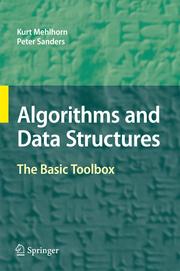 Algorithms and data structuresKurt Mehlhorn · 2008
Ranked by number of editions on Open Library, a rough measure of how lasting a book is.
🔗 Related topics
- Multiplication algorithm A multiplication algorithm is an algorithm (or method) to multiply two numbers. Depending on the size of the numbers, different algorithms are more efficient…
- Interleaving (data) In computing, interleaving of data refers to the interspersing of fields or channels of different meaning sequentially in memory, in processor registers…
- Ordinal utility In economics, an ordinal utility function is a function representing the preferences of an agent on an ordinal scale. Ordinal utility theory claims that…
- Hessian form of an elliptic curve In geometry, a Hessian curve is a cubic plane curve similar to the folium of Descartes that belongs to the Hesse pencil. It is named after the German mathematic…
- Edwards curve In mathematics, the Edwards curves are a family of elliptic curves studied by Harold Edwards in 2007. The concept of elliptic curves over finite fields…
- Focus recovery based on the linear canonical transform For digital image processing, the Focus recovery from a defocused image is an ill-posed problem since it loses the component of high frequency. Most of…
- Twisted Hessian curves In mathematics, twisted Hessian curves are a generalization of Hessian curves; they were introduced in elliptic curve cryptography to speed up the addition…
- Tripling-oriented Doche–Icart–Kohel curve The tripling-oriented Doche–Icart–Kohel curve is a form of an elliptic curve that has been used lately in cryptography[when?]; it is a particular type…