Live briefing
Everything about Join (SQL)
SQL clause
A join clause in the Structured Query Language (SQL) combines columns from one or more tables into a new table. The operation corresponds to a join operation in relational algebra. Informally, a join stitches two tables and puts on the same row records with matching fields. There are several variants of JOIN: INNER, LEFT OUTER, RIGHT OUTER, FULL OUTER, CROSS, and others. Wikipedia →
🧭 Start here: a 6-step reading path
- Read the overview: Join (SQL)A 5-minute orientation
- Pick up a classic book: Database system conceptsThe most-reprinted book on the subject
- Read the landmark paper: Performance Analysis of Not Only SQL Semi-Stream Join Using MongoDB for Real-Time Data WarehousingCited 24 times
- Go sideways: Null (SQL)A closely related topic
- Go sideways: SQL syntaxA closely related topic
📖 Definitions
No dictionary entry for this exact phrase.
🗂️ The subject at a glance
🏆 Landmark papers (most cited)
Performance Analysis of Not Only SQL Semi-Stream Join Using MongoDB for Real-Time Data Warehousing
Debunking the Myth of Join Ordering: Toward Robust SQL Analytics
Chimera: A System Design of Dual Storage and Traversal-Join Unified Query Processing for SQL/PGQ
Semantics preserving SQL-to-SPARQL query translation for Nested Right and Left Outer Join
The Optimization of Cost-Model for Join Operator on Spark SQL Platform
Join minimization in XML-to-SQL translation
Improving SQL Join Algorithms for Distributed Systems: A Case Study of Compute Express Link-Based Multihost Shared Memory
PERBANDINGAN KINERJA QUERY SQL JOIN TABLES DENGAN MENGGUNAKAN INDEX
📚 Books worth reading
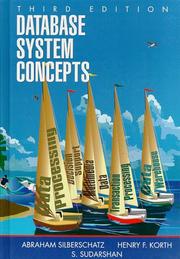 Database system conceptsAbraham Silberschatz · 1997
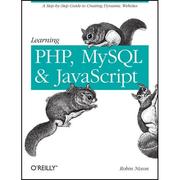 Learning PHP, MySQL & JavaScriptRobin Nixon · 2009
 Access database design & programmingSteven Roman · 1997
 Learning SQLAlan Beaulieu · 2005
 Sams teach yourself SQL in 10 minutesBen Forta · 1999
 SQL HacksAndrew Cumming, Gordon Russell · 2006
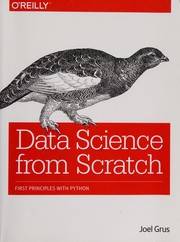 Data science from scratchJoel Grus · 2015
 PROC SQL by exampleHoward Schreier · 2008
Ranked by number of editions on Open Library, a rough measure of how lasting a book is.
🔗 Related topics
- Null (SQL) In the SQL database query language, null or NULL is a special marker used to indicate that a data value does not exist in the database. Introduced by the…
- SQL syntax The syntax of the SQL programming language is defined and maintained by ISO/IEC SC 32 as part of ISO/IEC 9075. This standard is not freely available. Despite…
- Set operations (SQL) Set operations in SQL is a type of operations which allow the results of multiple queries to be combined into a single result set. Set operators in SQL…
- Correlated subquery In a SQL database query, a correlated subquery (also known as a synchronized subquery) is a subquery (a query nested inside another query) that uses values…
- Insert (SQL) An SQL INSERT statement adds one or more records to any single table in a relational database. Insert statements have the following form: INSERT INTO table…
- Query plan A query plan (or query execution plan) is a sequence of steps used to access data in a SQL relational database management system. This is a specific case…
- Select (SQL) The SQL SELECT statement returns a result set of rows, from one or more tables. A SELECT statement retrieves zero or more rows from one or more database…
- Cursor (databases) In computer science, a database cursor is a mechanism that enables traversal over the records in a database. Cursors facilitate processing in conjunction…