Live briefing

Everything about Inventio
Canon of rhetoric
Inventio, one of the five canons of rhetoric, is the method used for the discovery of arguments in Western rhetoric and comes from the Latin word, meaning "invention" or "discovery". Inventio is the central, indispensable canon of rhetoric, and traditionally means a systematic search for arguments. Wikipedia →
🧭 Start here: a 6-step reading path
- Read the overview: InventioA 5-minute orientation
- Skim a recent paper: Inventio Fortunata: El libro sobre un fantasioso Ártico del medievoInfluential work since 2022
- Pick up a classic book: Inventio Sanctae CrvcisThe most-reprinted book on the subject
- Read the landmark paper: Reinventing inventioCited 45 times
- Go sideways: Rhetorical reasonA closely related topic
- Go sideways: DispositioA closely related topic
📖 Definitions
Noun One of the five canons of classical rhetoric: the method used for the discovery of arguments.
🗂️ The subject at a glance
🏆 Landmark papers (most cited)
Reinventing inventio
Whose Ideas?: The Technical Writer's Expertise in Inventio
Cicerón, Vitruvio, Daniele Barbaro y Andrea Palladio: el proceso creativo clásico de la inventio-dispositio y el concepto de disegno del Renacimiento italiano
An Early Literary Quotation from the Inventio S. Crucis. A Note on Baudonivia's Vita S. Radegundis (BHL 7049)
A Comment on "Reinventing Inventio"
Things in Doubt: <i>Inventio,</i> Dialectic, and Jewish Secrets in Cynewulf’s <i>Elene</i>
Inventio Patriarcharum
Inventio et dispositio dans la Baraxa nueva de versos de Francisco de la Torre y Sevil (1654)
🆕 Influential since 2022
Inventio Fortunata: El libro sobre un fantasioso Ártico del medievo
La fonte nascosta: inventio e dissonanza tra Paulhan, Desnos e Hopper
Proyecciones de la inventio en la literatura fragmentaria de Nélida Piñon
Imitatio and Inventio. How to Construct Meaning in Early Modern Emblems
Inventio e invenção na sátira atribuída a Gregório de Matos: o caso retórico e o caso Augusto de Campos
📚 Books worth reading
- 📕Inventio Sanctae CrvcisAlfred Holder · 1889
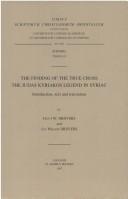 The finding of the True CrossH. J. W. Drijvers, Jan Willem Drijvers · 1997
- 📕Il vescovo e l'antiquarioGiorgio Mangani · 2016
 UUelcome Editions©Link Starbureiy · 2011
 UUelcome Matte©Link Starbureiy · 2010
Ranked by number of editions on Open Library, a rough measure of how lasting a book is.
🔗 Related topics
- Rhetorical reason Rhetorical reason is the faculty of discovering the crux of the matter. It is a characteristic of rhetorical invention (inventio) and it precedes argumentation…
- Dispositio Dispositio is the system used for the organization of arguments in the context of Western classical rhetoric. The word is Latin, and can be translated…
- Modes of persuasion The modes of persuasion, modes of appeal, or rhetorical appeals (Greek: pisteis) are the broadest classifications of rhetorical devices, which a persuasive…
- Classical rhetoric Classical rhetoric is the study and art of persuasive language as developed in classical antiquity: the ancient Greco-Roman world. In Europe, organized…
- Pathos Pathos is a Greek term referring to appeal to the emotions and ideals of the audience, eliciting feelings that already reside in them. Pathos is most often…
- Memoria Memoria is one of the five cannons in classical rhetoric involving memory in Western classical rhetoric. Memoria is the discipline of recalling the arguments…
- Glossary of rhetorical terms Owing to its origin in ancient Greece and Rome, English rhetorical theory frequently employs Greek and Latin words as terms of art. This page explains…
- Rhetorical stance Rhetorical stance refers to the deliberate choices made by a communicator in shaping and presenting their message. It encompasses the strategic decisions…