Live briefing
Everything about Interference freedom
Concurrent program verification method
In computer science, interference freedom is a technique for proving partial correctness of concurrent programs with shared variables. Hoare logic had been introduced earlier to prove the correctness of sequential programs. In her PhD thesis under advisor David Gries, Susan Owicki extended this work to apply to concurrent programs. Wikipedia →
🧭 Start here: a 6-step reading path
- Read the overview: Interference freedomA 5-minute orientation
- Skim a recent paper: Degrees of Freedom of the K -User Interference Channel Assisted by Active and Passive IRSsInfluential work since 2022
- Pick up a classic book: The positive obligations of the state under the European Convention of Human RightsThe most-reprinted book on the subject
- Read the landmark paper: Interference Alignment and Degrees of Freedom of the $K$-User Interference ChannelCited 2,555 times
- Go sideways: Separation logicA closely related topic
- Go sideways: Predicate transformer semanticsA closely related topic
📖 Definitions
No dictionary entry for this exact phrase.
🗂️ The subject at a glance
- Dijkstra's Principle of non-interference
- Interference freedom in terms of proof outlines
- Statements cobegin and await
- Auxiliary variables
- Deadlock and termination
- A simple example
- Examples of formally proved concurrent programs
- Dependencies on interference freedom
- Texts that discuss interference freedom
- Implementations of interference freedom
🏆 Landmark papers (most cited)
Interference Alignment and Degrees of Freedom of the $K$-User Interference Channel
Degrees of Freedom for the MIMO Interference Channel
Interference Alignment and the Degrees of Freedom of Wireless $X$ Networks
On the Degrees of Freedom Achievable Through Interference Alignment in a MIMO Interference Channel
Aligned Interference Neutralization and the Degrees of Freedom of the 2$\,\times \,$2$\,\times \,$2 Interference Channel
Generalized Degrees of Freedom of the Symmetric Gaussian $K$ User Interference Channel
The Degrees of Freedom Region and Interference Alignment for the MIMO Interference Channel With Delayed CSIT
Degrees of Freedom of Cache-Aided Wireless Interference Networks
🆕 Influential since 2022
Degrees of Freedom of the K -User Interference Channel Assisted by Active and Passive IRSs
Freedom from interference: Decisional privacy as a dimension of consumer privacy online
Distributed Sensitivity and Critical Interference Power Analysis of Multi-Degree-of-Freedom Navigation Interference for Global Navigation Satellite System Array Antennas
Degrees of Freedom of a K-User Interference Channel in the Presence of an Instantaneous Relay
Multi-degree-of-freedom measurement for space inertial test mass via laser interference
📚 Books worth reading
- 📕The positive obligations of the state under the European Convention of Human RightsDimitris Xenos · 2012
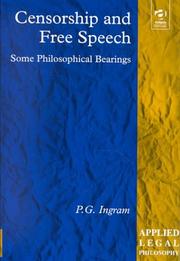 Censorship and free speechP. G. Ingram · 2000
 Reasoning rightsLiora Lazarus, Christopher McCrudden · 2014
- 📕Chinese Election Interference in TaiwanEdward J. Barss · 2021
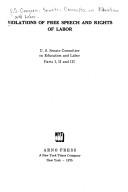 Violations of free speech and rights of laborUnited States. Congress. Senate. Committee on Education and Labor. · 1937
- 📕Violations of free speech and rights of laborUnited States. Congress. Senate. Committee on Education and Labor. · 1937
 PortraitsKate Chopin · 1979
 Conflict of loyaltiesJewish Theological Seminary of America. Institute for Religious and Social Studies. · 1952
Ranked by number of editions on Open Library, a rough measure of how lasting a book is.
🔗 Related topics
- Separation logic In computer science, separation logic is an extension of Hoare logic, a way of reasoning about programs. It was developed by John C. Reynolds, Peter O'Hearn…
- Predicate transformer semantics Predicate transformer semantics were introduced by Edsger Dijkstra in his seminal paper "Guarded commands, nondeterminacy and formal derivation of programs"…
- Bunched logic Bunched logic is a variety of substructural logic proposed by Peter O'Hearn and David Pym. Bunched logic provides primitives for reasoning about resource…
- Hoare logic Hoare logic (also known as Floyd–Hoare logic or Hoare rules) is a formal system with a set of logical rules for reasoning rigorously about the correctness…
- Guarded Command Language The Guarded Command Language (GCL) is a programming language defined by Edsger Dijkstra for predicate transformer semantics in EWD472. It combines programming…
- Jayadev Misra Jayadev ("Jay") Misra is an Indian-born computer scientist who has spent most of his professional career in the United States. He is the Schlumberger Centennial…
- TLA+ TLA+ is a formal specification language developed by Leslie Lamport. It is used for designing, modelling, documentation, and verification of programs,…
- KeY KeY is a formal verification tool for Java programs. It accepts specifications written in the Java Modeling Language to Java source files. These are transformed…