Live briefing

Everything about Interface description language
Computer language used to describe a software component's interface
An interface description language or interface definition language (IDL) is a generic term for a computer programming language that lets a program or object written in one programming language communicate with another program written in an unknown programming language. IDLs are usually used to describe data types and interfaces in a language-independent way, for example, between those written in C++ and those written in Java. Wikipedia →
🧭 Start here: a 6-step reading path
- Read the overview: Interface description languageA 5-minute orientation
- Skim a recent paper: A Retrieval-Augmented Natural Language Interface for Data Description and Meta-Analysis in the Pathogens-in-Foods (PIF) DatabaseInfluential work since 2022
- Pick up a classic book: The Verilog PLI handbookThe most-reprinted book on the subject
- Read the landmark paper: Creating a lightweight user interface description languageCited 26 times
- Go sideways: Inter-Language UnificationA closely related topic
- Go sideways: Web serviceA closely related topic
📖 Definitions
No dictionary entry for this exact phrase.
🗂️ The subject at a glance
🏆 Landmark papers (most cited)
Creating a lightweight user interface description language
Behavioral interface description of an object-oriented language with futures and promises
HCIDL: Human-computer interface description language for multi-target, multimodal, plastic user interfaces
Bridging the gap between a behavioural formal description technique and a user interface description language: Enhancing ICO with a graphical user interface markup language
OpenUIDL, A User Interface Description Language for Runtime Omni-Channel User Interfaces
Mapping the Interface Description Language type model into C
The interface description language: definition and use.
A Gesture Interface Description Language for a Unified Gesture Platform
🆕 Influential since 2022
📚 Books worth reading
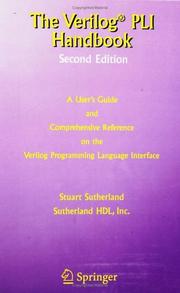 The Verilog PLI handbookStuart Sutherland · 1999
Ranked by number of editions on Open Library, a rough measure of how lasting a book is.
🔗 Related topics
- Inter-Language Unification Inter-Language Unification or ILU is a method for computer systems to exchange data[clarification needed], bridging differences in the way systems represent…
- Web service A web service (WS) is either: a service offered by an electronic device to another electronic device, communicating with each other via the Internet, or…
- Common Object Request Broker Architecture The Common Object Request Broker Architecture (CORBA) is a standard defined by the Object Management Group (OMG) designed to facilitate communication between…
- JSON-WSP JSON-WSP is a web service protocol that uses JSON for service description, requests and responses. It is inspired from JSON-RPC, but the lack of a service…
- XML Interface for Network Services XML Interface for Network Services (XINS) is an open-source technology for definition and implementation of internet applications, which enforces a sp…
- Apache Avro Avro is a row-oriented remote procedure call and data serialization framework developed within Apache's Hadoop project. It uses JSON for defining data…
- Remote procedure call In distributed computing, a remote procedure call (RPC) is an action in which a computer program causes a procedure (subroutine) to execute in a different…
- RMI-IIOP RMI-IIOP (read as "RMI over IIOP") denotes the Java Remote Method Invocation (RMI) interface over the Internet Inter-Orb Protocol (IIOP), which delivers…