Live briefing

Everything about Interaction Flow Modeling Language
Graphical notation for user interactions with a software system
The Interaction Flow Modeling Language (IFML) is a standardized modeling language in the field of software engineering. IFML includes a set of graphic notations to create visual models of user interactions and front-end behavior in software systems. Wikipedia →
🧭 Start here: a 6-step reading path
- Read the overview: Interaction Flow Modeling LanguageA 5-minute orientation
- Skim a recent paper: Graphical user Interfaces Generation from BPMN (Business Process Model and Notation) via IFML (Interaction Flow Modeling Language) up to PSM (Platform Specific Model) LevelInfluential work since 2022
- Pick up a classic book: Software EngineeringThe most-reprinted book on the subject
- Read the landmark paper: Automated Model-Based Test Case Generation for Web User Interfaces (WUI) From Interaction Flow Modeling Language (IFML) ModelsCited 30 times
- Go sideways: WebMLA closely related topic
- Go sideways: Systems modeling languageA closely related topic
📖 Definitions
No dictionary entry for this exact phrase.
🗂️ The subject at a glance
🏆 Landmark papers (most cited)
Automated Model-Based Test Case Generation for Web User Interfaces (WUI) From Interaction Flow Modeling Language (IFML) Models
An Extension of the Systems Modeling Language for Physical Interaction and Signal Flow Simulation
Formal semantics of OMG’s Interaction Flow Modeling Language (IFML) for mobile and rich-client application model driven development
Comparative Analysis of Interaction Flow Modeling Language Tools
A Pattern-Based Development Approach for Interaction Flow Modeling Language
Extensibility Interaction Flow Modeling Language Metamodels to Develop New Web Application Concerns
Analyzing Interaction Flow Modeling Language in Web Development Lifecycle
Enhancing Interaction Flow Modeling Language Metamodels for Designing Features of Rich Internet Applications
🆕 Influential since 2022
📚 Books worth reading
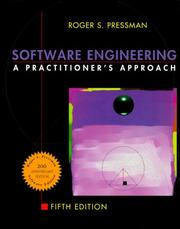 Software EngineeringRoger S. Pressman, Bruce Maxim · 1982
 The web application hacker's handbookDafydd Stuttard, Marcus Pinto · 2007
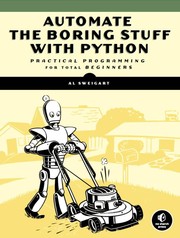 Automate the Boring Stuff with PythonAl Sweigart · 2015
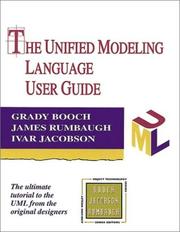 The unified modeling language user guideGrady Booch, James Rumbaugh · 1999
 Big data analytics for beginnersFaraz Rabbani · 2014
 Introduction to Computing Using PythonLjubomir Perkovic · 2011
 Treaty Occupationay ToxicologySuelen Queiroz · 2010
 The Conspirators HierarchyJohn Coleman · 1992
Ranked by number of editions on Open Library, a rough measure of how lasting a book is.
🔗 Related topics
- WebML Web Modeling Language, (WebML) is a visual notation and methodology for the design of a data-intensive web applications. It provides a graphical means…
- Systems modeling language The systems modeling language (SysML) is a general-purpose modeling language for systems engineering applications. It supports the specification, analysis…
- Enterprise Architect (software) Sparx Systems Enterprise Architect is a visual modeling and design tool based on the OMG UML. The platform supports: the design and construction of software…
- Web modeling Web modeling (a.k.a. model-driven Web development) is a branch of Web engineering that addresses the specific issues related to design and development…
- Unified Modeling Language The Unified Modeling Language (UML) is a general-purpose, object-oriented, visual modeling language that provides a way to visualize the architecture and…
- Model-driven architecture Model-driven architecture (MDA) is a software design approach for the development of software systems. It provides a set of guidelines for the structuring…
- MagicDraw MagicDraw is a proprietary visual UML, SysML, BPMN, and UPDM modeling tool with team collaboration support. The domain specific language (DSL) customization…
- Use case In both software and systems engineering, a use case is a structured description of a system’s behavior as it responds to requests from external actors…