Live briefing

Everything about Inhibitory control
Cognitive process
Inhibitory control, also known as response inhibition, is a cognitive process – and, more specifically, an executive function – that permits an individual to inhibit their impulses and natural, habitual, or dominant behavioral responses to stimuli in order to select a more appropriate behavior that is consistent with completing their goals. Self-control is an important aspect of inhibitory control. For example, successfully suppressing the natural behavioral response to eat cake when one is craving it while dieting requires the use of inhibitory control. Wikipedia →
🧭 Start here: a 6-step reading path
- Read the overview: Inhibitory controlA 5-minute orientation
- Skim a recent paper: Neural mechanisms of domain-general inhibitory controlInfluential work since 2022
- Pick up a classic book: Introduction to psycholinguisticsThe most-reprinted book on the subject
- Read the landmark paper: Impulsivity and Inhibitory ControlCited 1,021 times
- Go sideways: Executive functionsA closely related topic
- Go sideways: Cognitive inhibitionA closely related topic
📖 Definitions
Noun Synonym of response inhibition.
🗂️ The subject at a glance
🏆 Landmark papers (most cited)
Impulsivity and Inhibitory Control
A unified framework for inhibitory control
Inhibitory Plasticity: Balance, Control, and Codependence
Inhibitory control of the excitatory/inhibitory balance in psychiatric disorders
A Hierarchical Model of Inhibitory Control
Cortical inhibitory interneurons control sensory processing
The inhibitory control reflex
Inhibitory control of hippocampal inhibitory neurons
🆕 Influential since 2022
📚 Books worth reading
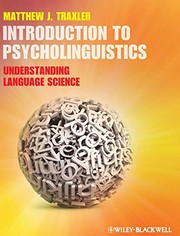 Introduction to psycholinguisticsMatthew J. Traxler · 2011
 Computational modelling in behavioural neuroscienceDietmar Heinke, Eirini Mavritsaki · 2009
 Models of horizontal eye movementsJohn D. Enderle · 2010
 Neural basis of motivational and cognitive controlRogier B. Mars · 2011
 Inhibitory control and drug abuse preventionMichael T. Bardo, Diana H. Fishbein · 2011
 International Review of NeurobiologyRonald J. Bradley · 2005
 MifRichard Bucala · 2007
 Human behavior, learning, and the developing brainKurt W. Fischer, Geraldine Dawson · 2006
Ranked by number of editions on Open Library, a rough measure of how lasting a book is.
🔗 Related topics
- Executive functions In cognitive science and neuropsychology, executive functions (collectively referred to as executive function and cognitive control) are a set of cognitive…
- Cognitive inhibition Cognitive inhibition refers to the mind's ability to tune out stimuli that are irrelevant to the task/process at hand or to the mind's current state. Additional…
- Executive dysfunction In psychology and neuroscience, executive dysfunction, or executive function deficit, is a disruption to the efficacy of the executive functions, which…
- Neurobiological effects of physical exercise The neurobiological effects of physical exercise involve possible interrelated effects on brain structure, brain function, and cognition. Research in humans…
- Dopaminergic pathways Dopaminergic pathways (dopamine pathways, dopaminergic projections) in the human brain are involved in both physiological and behavioral processes including…
- Working memory Working memory is a cognitive system with a limited capacity that can hold information temporarily. It is important for reasoning and the guidance of decision-m…
- Interactions between the emotional and executive brain systems The neurocircuitry that underlies executive function processes and emotional and motivational processes are known to be distinct in the brain. However…
- Directed attention fatigue Directed attention fatigue (DAF) is a neuropsychological phenomenon that results from overuse of the brain's inhibitory attention mechanisms, which handle…