Live briefing
Everything about Index calculus algorithm
Probabilistic algorithm for computing discrete logarithms
In computational number theory, the index calculus algorithm is a probabilistic algorithm for computing discrete logarithms. Dedicated to the discrete logarithm in where is a prime, index calculus leads to a family of algorithms adapted to finite fields and to some families of elliptic curves. The algorithm collects relations among the discrete logarithms of small primes, computes them by a linear algebra procedure and finally expresses the desired discrete logarithm with respect to the discrete logarithms of small primes. Wikipedia →
🧭 Start here: a 6-step reading path
- Read the overview: Index calculus algorithmA 5-minute orientation
- Pick up a classic book: Discrete mathematicsThe most-reprinted book on the subject
- Read the landmark paper: Index calculus algorithm for non-planar curvesCited 0 times
- Go sideways: Function field sieveA closely related topic
- Go sideways: Counting points on elliptic curvesA closely related topic
📖 Definitions
No dictionary entry for this exact phrase.
🗂️ The subject at a glance
🏆 Landmark papers (most cited)
📚 Books worth reading
 Discrete mathematicsKenneth A. Ross · 1985
 Language and Automata Theory and ApplicationsAdrian-Horia Dediu · 2012
 OptimizationKenneth Lange · 2013
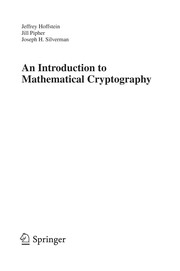 An introduction to mathematical cryptographyJeffrey Hoffstein · 2008
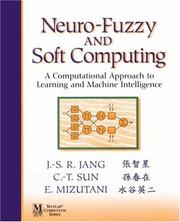 Neuro-fuzzy and soft computingJyh-Shing Roger Jang, Chuen-Tsai Sun · 1996
 Logic in Computer ScienceMark Ryan · 1999
 Practical Electronics for InventorsPaul Scherz · 2000
 Discrete mathematicsLászló Lovász, Jozsef Pelikan · 2003
Ranked by number of editions on Open Library, a rough measure of how lasting a book is.
🔗 Related topics
- Function field sieve In mathematics, the Function Field Sieve is one of the most efficient algorithms to solve the Discrete Logarithm Problem (DLP) in a finite field. It has…
- Counting points on elliptic curves An important aspect in the study of elliptic curves is devising effective ways of counting points on the curve. There have been several approaches to do…
- Discrete logarithm In mathematics, for given real numbers a and b, the logarithm logb(a) is a number x such that bx=a. The discrete logarithm is an analogous concept in group…
- Decisional Diffie–Hellman assumption The decisional Diffie–Hellman (DDH) assumption is a computational hardness assumption about a certain problem involving discrete logarithms in cyclic groups…
- Hyperelliptic curve cryptography Hyperelliptic curve cryptography is similar to elliptic curve cryptography (ECC) insofar as the Jacobian of a hyperelliptic curve is an abelian group in…
- Discrete logarithm records Discrete logarithm records are the best results achieved to date in solving the discrete logarithm problem, which is the problem of finding solutions x…
- Elliptic curve only hash The elliptic curve only hash (ECOH) algorithm was submitted as a candidate for SHA-3 in the NIST hash function competition. However, it was rejected in…
- Elliptic-curve cryptography Elliptic-curve cryptography (ECC) is an approach to public-key cryptography based on the algebraic structure of elliptic curves over finite fields. ECC…