Live briefing

Everything about Hyperbolic functions
Hyperbolic analogues of trigonometric functions
In mathematics, hyperbolic functions are analogues of the ordinary trigonometric functions, but defined using the hyperbola rather than the circle. Just as the points (cos t, sin t) form a circle with a unit radius, the points (cosh t, sinh t) form the right half of the unit hyperbola. Also, similarly to how the derivatives of sin(t) and cos(t) are cos(t) and –sin(t), the derivatives of sinh(t) and cosh(t) are cosh(t) and sinh(t). Wikipedia →
🧭 Start here: a 6-step reading path
- Read the overview: Hyperbolic functionsA 5-minute orientation
- Skim a recent paper: Neural network operators with hyperbolic tangent functionsInfluential work since 2022
- Pick up a classic book: Automorphisms of surfaces after Nielsen and ThurstonThe most-reprinted book on the subject
- Read the landmark paper: Spectral functions and zeta functions in hyperbolic spacesCited 157 times
- Go sideways: Trigonometric functionsA closely related topic
- Go sideways: Hyperbolic triangleA closely related topic
📖 Definitions
Noun plural of hyperbolic function
🏆 Landmark papers (most cited)
Spectral functions and zeta functions in hyperbolic spaces
The k-Fibonacci hyperbolic functions
Generalized Hyperbolic Functions
Hyperbolic entire functions with full hyperbolic dimension and approximation by Eremenko-Lyubich functions
Dynamics of hyperbolic meromorphic functions
Inequalities for hyperbolic functions
Infinite series involving hyperbolic functions
Harmonic functions on hyperbolic graphs
🆕 Influential since 2022
Neural network operators with hyperbolic tangent functions
Some Geometrical Results Associated with Secant Hyperbolic Functions
Integration of Functions of a Hyperbolic Variable
Schwarz–Pick Lemma for Harmonic and Hyperbolic Harmonic Functions
Godunov loss functions for modelling of hyperbolic conservation laws
📚 Books worth reading
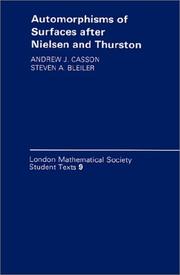 Automorphisms of surfaces after Nielsen and ThurstonAndrew J. Casson · 1982
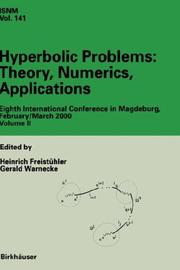 Hyperbolic problemsGerald Warnecke, Heinrich Freistühler · 2001
- 📕Generation of three-dimensional body-fitted grids by solving hyperbolic partial differential equationsJoseph L. Steger · 1989
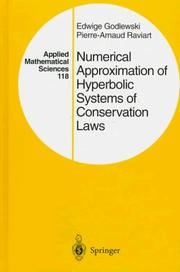 Numerical approximation of hyperbolic systems of conservation lawsEdwige Godlewski · 1996
- 📕Harmonic and Subharmonic Function Theory on the Hyperbolic BallManfred Stoll · 2016
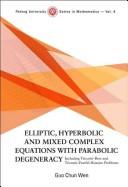 Elliptic, hyperbolic and mixed complex equations with parabolic degeneracyGuo Chun Wen · 2007
 Variable Lebesgue Spaces and Hyperbolic SystemsDavid Cruz-Uribe, Sergey Tikhonov · 2014
- 📕The Runge-Kutta discontinuous Galerkin method for conservation laws VB. Cockburn · 1997
Ranked by number of editions on Open Library, a rough measure of how lasting a book is.
🔗 Related topics
- Trigonometric functions In mathematics, the trigonometric functions (also called circular functions, angle functions or goniometric functions) are real functions which relate…
- Hyperbolic triangle In hyperbolic geometry, a hyperbolic triangle is a triangle in the hyperbolic plane. It consists of three line segments called sides or edges and three…
- Hyperbolic angle In geometry, hyperbolic angle is a real number determined by the area of the corresponding hyperbolic sector of xy = 1 in Quadrant I of the Cartesian plane…
- Sine and cosine In mathematics, sine and cosine are trigonometric functions. The sine and cosine of an acute angle are defined in the context of a right triangle: the…
- Trigonometric functions of matrices The trigonometric functions (especially sine and cosine) for complex square matrices occur in solutions of second-order systems of differential equations…
- Inverse hyperbolic functions In mathematics, the inverse hyperbolic functions are inverses of the hyperbolic functions, analogous to the inverse circular functions. There are six in…
- Euler's formula Euler's formula is a mathematical formula in complex analysis that establishes the fundamental relationship between the trigonometric functions and the…
- Unit circle In mathematics, a unit circle is a circle of unit radius—that is, a radius of 1. Frequently, especially in trigonometry, the unit circle is the circle…