Everything about Homomorphism
Structure-preserving map between two algebraic structures of the same type
In algebra, a homomorphism is a structure-preserving map between two algebraic structures of the same type. The word homomorphism comes from the Ancient Greek language: ὁμός meaning "same" and μορφή meaning "form" or "shape". However, the word was apparently introduced to mathematics due to a (mis)translation of German ähnlich meaning "similar" to ὁμός meaning "same". The term "homomorphism" appeared as early as 1892, when it was attributed to the German mathematician Felix Klein (1849–1925). Wikipedia →
🧭 Start here: a 6-step reading path
- Read the overview: HomomorphismA 5-minute orientation
- Skim a recent paper: Reversible Data Hiding in Shared Images Based on Syndrome Decoding and HomomorphismInfluential work since 2022
- Pick up a classic book: Torsion in SU-bordismThe most-reprinted book on the subject
- Read the landmark paper: Symplectic reflection algebras, Calogero-Moser space, and deformed Harish-Chandra homomorphismCited 338 times
- Go sideways: EpimorphismA closely related topic
- Go sideways: MorphismA closely related topic
📖 Definitions
Noun A structure-preserving map between two algebraic structures of the same type, such as groups, rings, or vector spaces.
Noun A similar appearance of two unrelated organisms or structures, as for example with fish and whales.
🗂️ The subject at a glance
🏆 Landmark papers (most cited)
Symplectic reflection algebras, Calogero-Moser space, and deformed Harish-Chandra homomorphism
The complexity of homomorphism and constraint satisfaction problems seen from the other side
Shifted Adaption Homomorphism Encryption for Mobile and Cloud Learning
Tree-depth, subgraph coloring and homomorphism bounds
Group representations, λ-rings and the J-homomorphism
On a Homomorphism of the de Bruijn Graph and its Applications to the Design of Feedback Shift Registers
Reflection positivity, rank connectivity, and homomorphism of graphs
$ K$-COHOMOLOGY OF SEVERI-BRAUER VARIETIES AND THE NORM RESIDUE HOMOMORPHISM
🆕 Influential since 2022
Reversible Data Hiding in Shared Images Based on Syndrome Decoding and Homomorphism
Verifiable Searchable Symmetric Encryption Over Additive Homomorphism
MDA-FLH: Multidimensional Data Aggregation Scheme With Fine-Grained Linear Homomorphism for Smart Grid
The quantum-to-classical graph homomorphism game
Homomorphism complexes, reconfiguration, and homotopy for directed graphs
📚 Books worth reading
- 📕Torsion in SU-bordismP. E. Conner · 1966
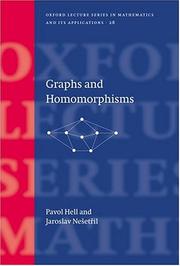 Graphs and homomorphismsPavol Hell · 2004
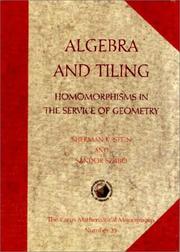 Algebra and tilingSherman K. Stein, Sherman Stein · 1994
- 📕Fibre bundles and Chern-Weil theoryJohan L. Dupont · 2003
 Stability of Mappings of Hyers-Ulam Type (Hadronic Press Collection of Original Articles)Themistocles M. Rassias · 1994
 Approximate homotopy of homomorphisms from C(X) into a simple C*-algebraHuaxin Lin · 2010
- 📕On Lukasiewicz homomorphismsManuel Abad · 1992
- 📕Application of diclique representation to graph homomorphism detectionJanusz W. Łąski · 1978
Ranked by number of editions on Open Library, a rough measure of how lasting a book is.
🔗 Related topics
- Epimorphism In category theory, an epimorphism is a morphism f : X → Y that is right-cancellative in the sense that, for all objects Z and all morphisms g1, g2: Y…
- Morphism In mathematics, a morphism is a concept of category theory that generalizes structure-preserving maps such as homomorphism between algebraic structures…
- Monomorphism In the context of abstract algebra or universal algebra, a monomorphism is an injective homomorphism. A monomorphism from X to Y is often denoted with…
- Kernel (algebra) In algebra, the kernel of a homomorphism is the relation describing how elements in the domain of the homomorphism become related in the image. A homomorphism…
- Inverse element In mathematics, the concept of an inverse element generalises the concepts of opposite (−x) and reciprocal (1/x) of numbers. Given an operation denoted…
- Category (mathematics) In mathematics, a category (sometimes called an abstract category to distinguish it from a concrete category) is a collection of "objects" that are linked…
- Category of rings In mathematics, the category of rings, denoted by Ring, is the category whose objects are rings (with identity) and whose morphisms are ring homomorphisms…
- Endomorphism In abstract algebra, an endomorphism is a homomorphism from a mathematical object to itself. More generally in category theory, an endomorphism is a morphism…