Live briefing

Everything about Hashed array tree
In computer science, a hashed array tree (HAT) is a dynamic array data-structure published by Edward Sitarski in 1996, maintaining an array of separate memory fragments to store the data elements, unlike simple dynamic arrays which maintain their data in one contiguous memory area. Its primary objective is to reduce the amount of element copying due to automatic array resizing operations, and to improve memory usage patterns. Wikipedia →
🧭 Start here: a 6-step reading path
- Read the overview: Hashed array treeA 5-minute orientation
- Pick up a classic book: Fundamentals of Computer Programming with CSharp Free Book (by Nakov & Co.)The most-reprinted book on the subject
- Go sideways: Dynamic arrayA closely related topic
- Go sideways: Hash tableA closely related topic
📖 Definitions
No dictionary entry for this exact phrase.
🗂️ The subject at a glance
🏆 Landmark papers (most cited)
- No matching papers found.
📚 Books worth reading
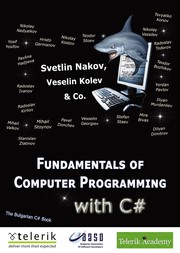 Fundamentals of Computer Programming with CSharp Free Book (by Nakov & Co.)Svetlin Nakov · 2013
Ranked by number of editions on Open Library, a rough measure of how lasting a book is.
🔗 Related topics
- Dynamic array In computer science, a dynamic array, growable array, resizable array, dynamic table, mutable array, or array list is a random access, variable-size list…
- Hash table In computer science, a hash table is a data structure that implements an associative array, also called a dictionary or simply map; an associative array…
- Comparison of data structures This is a comparison of the performance of notable data structures, as measured by the complexity of their logical operations. For a more comprehensive…
- Asymptotically optimal algorithm In computer science, an algorithm is said to be asymptotically optimal if, roughly speaking, for large inputs it performs at worst a constant factor (independen…
- Potential method In computational complexity theory, the potential method is a method used to analyze the amortized time and space complexity of a data structure, a measure…
- Dynamic perfect hashing In computer science, dynamic perfect hashing is a programming technique for resolving collisions in a hash table data structure. While more memory-intensive…
- Amortized analysis In computer science, amortized analysis is a method for analyzing a given algorithm's complexity, or how much of a resource, especially time or memory…
- Van Emde Boas tree A van Emde Boas tree (Dutch pronunciation: [vɑn ˈɛmdə ˈboːɑs]), also known as a vEB tree or van Emde Boas priority queue, is a tree data structure which…