Everything about Hash function
Mapping arbitrary data to fixed-size values

A hash function is any function that can be used to map data of arbitrary size to fixed-size values, though there are some hash functions that support variable-length output. The values returned by a hash function are called hash values, hash codes, (hash/message) digests, or simply hashes. The values are usually used to index a fixed-size table called a hash table. Use of a hash function to index a hash table is called hashing or scatter-storage addressing. Wikipedia →
🧭 Start here: a 6-step reading path
- Read the overview: Hash functionA 5-minute orientation
- Skim a recent paper: Quantum hash function based on controlled alternate lively quantum walksInfluential work since 2022
- Pick up a classic book: Computer networkingThe most-reprinted book on the subject
- Read the landmark paper: A fast software one-way hash functionCited 85 times
- Go sideways: Universal hashingA closely related topic
- Go sideways: Rolling hashA closely related topic
📖 Definitions
Noun An algorithm that generates a numeric, or fixed-size character output from a variable-sized piece of text or other data; used in database table queries, cryptography and in error-checking.
🗂️ The subject at a glance
🏆 Landmark papers (most cited)
A fast software one-way hash function
Hash function requirements for Schnorr signatures
Secure hash function based on neural network
Finding Bugs in Cryptographic Hash Function Implementations
Hash‐One: a lightweight cryptographic hash function
Whirlwind: a new cryptographic hash function
Improved Collision Attack on Hash Function MD5
The Whirlpool Secure Hash Function
🆕 Influential since 2022
Quantum hash function based on controlled alternate lively quantum walks
Homoglyph Attack Detection Model Using Machine Learning and Hash Function
From Collatz Conjecture to chaos and hash function
A Review of Hash Function Types and their Applications
A quantum hash function with grouped coarse-grained boson sampling
📚 Books worth reading
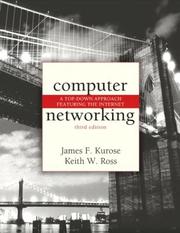 Computer networkingJames F. Kurose, Keith W. Ross · 1900
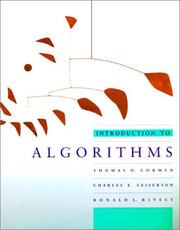 Introduction to AlgorithmsThomas H. Cormen, Charles E. Leiserson · 1990
 Information SecurityMark Stamp · 2005
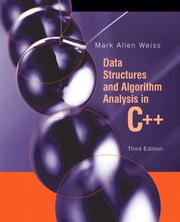 Data structures and algorithm analysis in CMark Allen Weiss · 1993
 Handbook of applied cryptographyAlfred J. Menezes · 1996
 Probability and ComputingMichael Mitzenmacher, Eli Upfal · 2005
- 📕The mathematics of public key cryptographySteven D. Galbraith · 2012
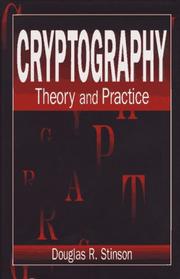 CryptographyDouglas R. Stinson · 1995
Ranked by number of editions on Open Library, a rough measure of how lasting a book is.
🔗 Related topics
- Universal hashing In mathematics and computing, universal hashing (in a randomized algorithm or data structure) refers to selecting a hash function at random from a family…
- Rolling hash A rolling hash (also known as recursive hashing or rolling checksum) is a hash function where the input is hashed in a window that moves through the input…
- Hash table In computer science, a hash table is a data structure that implements an associative array, also called a dictionary or simply map; an associative array…
- Very smooth hash In cryptography, Very Smooth Hash (VSH) is a provably secure cryptographic hash function invented in 2005 by Scott Contini, Arjen Lenstra, and Ron Steinfeld…
- K-independent hashing In computer science, a family of hash functions is said to be k-independent, k-wise independent if selecting a function at random from the family guarantees…
- SWIFFT In cryptography, SWIFFT is a collection of provably secure hash functions. It is based on the concept of the fast Fourier transform (FFT). SWIFFT is not…
- Security of cryptographic hash functions In cryptography, cryptographic hash functions can be divided into two main categories. In the first category are those functions whose designs are based…
- One-way function Unsolved problem in computer science Do one-way functions exist? More unsolved problems in computer science In computer science, a one-way function is…