Live briefing
Everything about Handshape
Aspect of sign languages
In sign languages, handshape, or dez, refers to the distinctive configurations that the hands take as they are used to form words. In Stokoe terminology it is known as the dez, an abbreviation of designator. Handshape is one of five components of a sign, along with location, orientation, movement, and nonmanual features. Different sign languages make use of different handshapes. Wikipedia →
🧭 Start here: a 6-step reading path
- Read the overview: HandshapeA 5-minute orientation
- Skim a recent paper: Classifier handshape choice in Russian Sign Language and Sign Language of the NetherlandsInfluential work since 2022
- Pick up a classic book: Christmas cookiesThe most-reprinted book on the subject
- Read the landmark paper: When does a system become phonological? Handshape production in gesturers, signers, and homesignersCited 85 times
- Go sideways: Stokoe notationA closely related topic
- Go sideways: American manual alphabetA closely related topic
📖 Definitions
Noun The held position of the hand and fingers in producing a particular sign.
🗂️ The subject at a glance
🏆 Landmark papers (most cited)
When does a system become phonological? Handshape production in gesturers, signers, and homesigners
Handshape complexity as a precursor to phonology: Variation, emergence, and acquisition
Location, Handshape & Movement: Young Children’s Acquisition of the Formational Aspects of American Sign Language
Cognitive, Cultural, and Linguistic Sources of a Handshape Distinction Expressing Agentivity
Variation in handshape and orientation in British Sign Language: The case of the ‘1’ hand configuration
Young children's acquisition of the handshape aspect of American Sign Language signs: Parental report findings
The role of iconicity, construal, and proficiency in the online processing of handshape
Phonological variation in American Sign Language: The case of 1 handshape
🆕 Influential since 2022
Classifier handshape choice in Russian Sign Language and Sign Language of the Netherlands
LSWH100: A handshape dataset for Brazilian sign language (Libras) using SignWriting
Conventionalization of Iconic Handshape Preferences in Family Homesign Systems
Choice of classifier handshape in Catalan Sign Language: A corpus study
comparison of small sample methods for Handshape Recognition
📚 Books worth reading
 Christmas cookiesLisa B. Zwirn · 2008
- 📕K HandshapeMaureen Jennings · 2008
- 📕American Sign Language handshape dictionaryRichard A. Tennant · 2010
 Biometric RecognitionWei-Shi Zheng · 2012
 Pasta by handJenn Louis · 2015
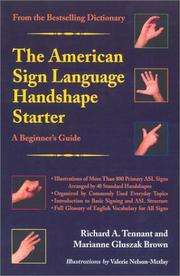 The American Sign Language Handshape StarterRichard A. Tennant · 2002
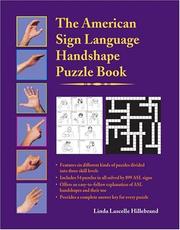 The American Sign Language handshape puzzle bookLinda Lascelle Hillebrand · 2004
 The K hand shapeMaureen Jennings · 2008
Ranked by number of editions on Open Library, a rough measure of how lasting a book is.
🔗 Related topics
- Stokoe notation Stokoe notation (/ˈstoʊki/ STOH-kee) is the first phonemic script used for sign languages. It was created by William Stokoe for American Sign Language…
- American manual alphabet The American manual alphabet is a one-handed manual representation of the alphabet used in English. It is used by users of American Sign Language to represent…
- American Sign Language phonology American Sign Language (ASL) and other sign languages are characterized by phonological processes analogous to those of spoken languages. Phonemes serve…
- Movement (sign language) In sign languages, movement, or sig, refers to the distinctive hand actions that form words. In William Stokoe's terminology, it is the sig, an abbreviation…
- Profanity in American Sign Language American Sign Language (ASL), the sign language used by the deaf community throughout most of North America, has a rich vocabulary of terms, which include…
- Hamburg Notation System The Hamburg Sign Language Notation System (HamNoSys) is a transcription system for all sign languages (including American Sign Language). It has a direct…
- Location (sign language) In sign languages, location, or tab, refers to specific places that the hands occupy as they are used to form signs. In Stokoe terminology it is known…
- Nepali Sign Language Nepali Sign Language (Nepali: नेपाली साङ्केतिक भाषा, romanized: Nēpālī Sāṅkētika Bhāṣā) is the main sign language of Nepal. It is a partially standardized…