Live briefing
Everything about Hands-on computing
Hands-on computing is a branch of human-computer interaction research which focuses on computer interfaces that respond to human touch or expression, allowing the machine and the user to interact physically. Hands-on computing can make complicated computer tasks more natural to users by attempting to respond to motions and interactions that are natural to human behavior. Thus hands-on computing is a component of user-centered design, focusing on how users physically respond to virtual environments. Wikipedia →
🧭 Start here: a 6-step reading path
- Read the overview: Hands-on computingA 5-minute orientation
- Skim a recent paper: Do project-based learning, hands-on activities, and flipped teaching enhance student’s learning of introductory theoretical computing classes?Influential work since 2022
- Pick up a classic book: Computer literacyThe most-reprinted book on the subject
- Read the landmark paper: Hands-on reservoir computing: a tutorial for practical implementationCited 219 times
- Go sideways: Pen computingA closely related topic
- Go sideways: Ken HinckleyA closely related topic
📖 Definitions
No dictionary entry for this exact phrase.
🗂️ The subject at a glance
🏆 Landmark papers (most cited)
Hands-on reservoir computing: a tutorial for practical implementation
Teaching Quantum Computing to High-School-Aged Youth: A Hands-On Approach
From computing to quantum mechanics: accessible and hands-on quantum computing education for high school students
Hands-on tutorial for parallel computing with R
Hands-on parallel & distributed computing with Raspberry Pi devices and clusters
Hands-on Computing
Computing, You Have Blood on Your Hands!
Experience in teaching quantum computing with hands-on programming labs
🆕 Influential since 2022
Do project-based learning, hands-on activities, and flipped teaching enhance student’s learning of introductory theoretical computing classes?
Advanced resource management: A hands-on master course in HPC and cloud computing
Myoelectric Prosthetic Hands: A Review of Muscle Synergy, Machine Learning and Edge Computing
Hands-Free Computing Gesture-Based Virtual Mouse and Keyboard
Real-time Prediction in Hands-free Computing for Disabled
📚 Books worth reading
 Computer literacyArthur Luehrmann · 1983
- 📕Hands-On HelpIsaac M. Marks, Kate Cavanagh · 2007
 Hands on sociologyWilliam Feigelman · 1993
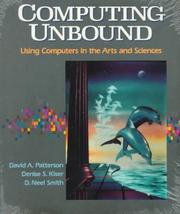 Computing unboundDavid A. Patterson, Denise S. Kiser · 1988
 Monte Carlo MethodsSujaul Chowdhury · 2021
- 📕BundleTed Simpson, Jason Novak · 2017
- 📕Hands-on computingR. Dale Hobart, Sharon K. Octernaud · 1989
 Computer SecurityWenliang Du · 2017
Ranked by number of editions on Open Library, a rough measure of how lasting a book is.
🔗 Related topics
- Pen computing Pen computing refers to any computer user-interface using a digital pen or stylus and tablet, over input devices such as a keyboard or a mouse. Historically…
- Ken Hinckley Ken Hinckley (born 1969) is an American computer scientist and inventor. He is a senior principal research manager at Microsoft Research. He is known for…
- Pointing device A pointing device is a human interface device that allows a user to input spatial (i.e., continuous and multi-dimensional) data to a computer. Graphical…
- Multi-touch In computing, multi-touch is technology that enables a surface (a touchpad or touchscreen) to recognize the presence of more than one point of contact…
- Touchscreen A touchscreen (or touch screen) is a type of display that can detect touch input from a user to do a specific task. It consists of both an input device…
- Microsoft Tablet PC Microsoft Tablet PC is a term coined by Microsoft for tablet computers conforming to a hardware specification the company announced in 2001 for a pen-enabled…
- Input device In computing, an input device is a piece of equipment used to enter data and control signals to an information processing system, such as a computer or…
- User interface In the industrial design field of human–computer interaction, a user interface (UI) is the space where interactions between humans and machines occur.…