Everything about Graph
Topics referred to by the same term
Graph may refer to: Wikipedia →
🧭 Start here: a 6-step reading path
- Read the overview: GraphA 5-minute orientation
- Skim a recent paper: E(3)-equivariant graph neural networks for data-efficient and accurate interatomic potentialsInfluential work since 2022
- Pick up a classic book: Graphs, algorithms, and optimizationThe most-reprinted book on the subject
- Read the landmark paper: Graph-based genome alignment and genotyping with HISAT2 and HISAT-genotypeCited 15,688 times
- Go sideways: DFSA closely related topic
- Go sideways: Discrete mathematicsA closely related topic
📖 Definitions
Noun A data chart (graphical representation of data) intended to illustrate the relationship between a set (or sets) of numbers (quantities, measurements or indicative numbers) and a reference set, whose elements are indexed to those of the former set(s) and may or may not be numbers.
Noun A set of points constituting a graphical representation of a real function; a set of tuples (x1,x2,…,xm,y)∈ℝm+1, where y=f(x1,x2,…,xm) for a given function f:ℝm→ℝ. See also Graph of a function on Wikipedia.Wikipedia
Noun A set of vertices (or nodes) connected together by edges; an ordered pair of sets (V,E), where the elements of V are called vertices or nodes and E is a set of pairs (called edges) of elements of V. See also Graph (discrete mathematics) on Wikipedia.Wikipedia
Noun A topological space which represents some graph (ordered pair of sets) and which is constructed by representing the vertices as points and the edges as copies of the real interval [0,1] (where, for any given edge, 0 and 1 are identified with the points representing the two vertices) and equipping the result with a particular topology called the graph topology.
🗂️ The subject at a glance
🏆 Landmark papers (most cited)
Graph-based genome alignment and genotyping with HISAT2 and HISAT-genotype
Complex brain networks: graph theoretical analysis of structural and functional systems
A Comprehensive Survey on Graph Neural Networks
MEGAHIT: an ultra-fast single-node solution for large and complex metagenomics assembly via succinct de Bruijn graph
The Graph Neural Network Model
Patterns in Hydrogen Bonding: Functionality and Graph Set Analysis in Crystals
Graph-Based Algorithms for Boolean Function Manipulation
Fast approximate energy minimization via graph cuts
🆕 Influential since 2022
E(3)-equivariant graph neural networks for data-efficient and accurate interatomic potentials
Graph neural network for traffic forecasting: A survey
Graph Neural Networks in Recommender Systems: A Survey
A universal graph deep learning interatomic potential for the periodic table
Graph neural networks for materials science and chemistry
📚 Books worth reading
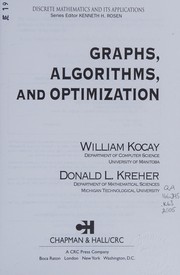 Graphs, algorithms, and optimizationWilliam Kocay · 2004
 Introduction to graph theoryRobin J. Wilson · 1972
 Graphs & digraphsGary Chartrand, L. Lesniak · 1986
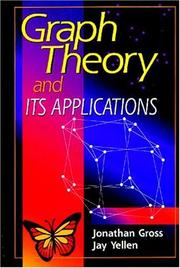 Graph theory and its applicationsJonathan L. Gross, Jay Yellen · 1999
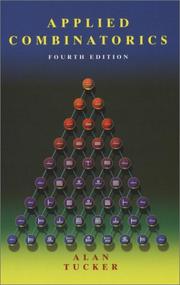 Applied combinatoricsAlan C. Tucker · 1980
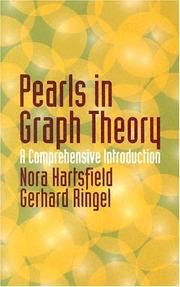 Pearls in graph theoryNora Hartsfield · 1990
- 📕Théorie des graphes et ses applicationsClaude Berge · 1958
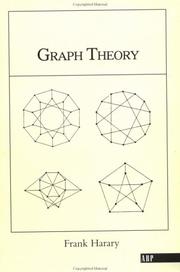 Graph theoryFrank Harary · 1969
Ranked by number of editions on Open Library, a rough measure of how lasting a book is.
🔗 Related topics
- DFS DFS may refer to: Dancer Fitzgerald Sample, advertising agency, now Saatchi & Saatchi DFS Furniture, a furniture retailer in the United Kingdom and Ireland…
- Discrete mathematics Discrete mathematics is the study of mathematical structures that can be considered "discrete" (in a way analogous to discrete variables, having a one-to-one…
- Three-dimensional graph A three-dimensional graph may refer to A graph (discrete mathematics), embedded into a three-dimensional space The graph of a function of two variables…
- Time domain In mathematics and signal processing, the time domain is a representation of how a signal, function, or data set varies with time. It is used for the analysis…
- Graph theory In mathematics and computer science, graph theory is the study of graphs, which are mathematical structures used to model pairwise relations between objects…
- Ravindran Kannan Ravindran (Ravi) Kannan (Tamil: ரவீந்திரன் கண்ணன்); born 12 March 1953, is a theoretical computer scientist. His work has mainly focused on efficient algorithms…
- Frequency domain In mathematics, physics, electronics, control systems engineering, and statistics, the frequency domain refers to the analysis of mathematical functions…
- Outline of combinatorics Combinatorics is a branch of mathematics concerning the study of finite or countable discrete structures. Matroid Greedoid Ramsey theory Van der Waerden's…