Live briefing

Everything about Getting to Yes
1981 book about negotiation methods by Roger Fisher
Getting to Yes: Negotiating Agreement Without Giving In is a best-selling 1981 non-fiction book by Roger Fisher and William Ury. Subsequent editions in 1991 and 2011 added Bruce Patton as co-author. All of the authors were members of the Harvard Negotiation Project. Wikipedia →
🧭 Start here: a 6-step reading path
- Read the overview: Getting to YesA 5-minute orientation
- Skim a recent paper: Getting beyond yes: fast-tracking implementation of the United Nations agreement for marine biodiversity beyond national jurisdictionInfluential work since 2022
- Pick up a classic book: Eat That Frog! 21 Great Ways to Stop Procrastinating and Get More Done in Less TimeThe most-reprinted book on the subject
- Read the landmark paper: Getting to Social Action: The Youth Empowerment Strategies (YES!) ProjectCited 100 times
- Go sideways: Best alternative to a negotiated agreementA closely related topic
- Go sideways: William UryA closely related topic
📖 Definitions
No dictionary entry for this exact phrase.
🗂️ The subject at a glance
🏆 Landmark papers (most cited)
Getting to Social Action: The Youth Empowerment Strategies (YES!) Project
Getting to Yes: Corporate Power and the Creation of a Psychopharmaceutical Blockbuster
Getting to Yes in China: Exploring Personality Effects in Chinese Negotiation Styles
Getting Past Yes: From Capital Creation to Action
Getting to the Table and Getting to Yes: An Analysis of International Negotiations1
The Role of Power and Principle in Getting to YES
Getting to “Yes”: Overcoming Client Reluctance to Engage in Chair Work
Getting to ‘Yes’: Governing Genetically Modified Crops in Uganda
🆕 Influential since 2022
Getting beyond yes: fast-tracking implementation of the United Nations agreement for marine biodiversity beyond national jurisdiction
Getting to yes: The role of creditor coordination in debt restructuring negotiations
A governance and legal framework for getting to “yes” with enterprise-level data integration
The Art of Negotiation: Avoiding Positional Bargaining and Getting to Yes
Getting to Yes
📚 Books worth reading
 Eat That Frog! 21 Great Ways to Stop Procrastinating and Get More Done in Less TimeBrian Tracy · 2001
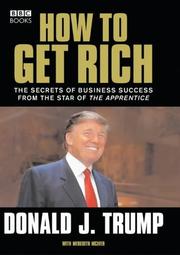 How to Get RichDonald Trump, Meredith McIver · 1987
 Getting Things DoneDavid Allen, David Allen · 2001
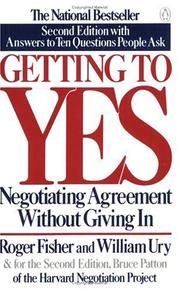 Getting to yesRoger Drummer Fisher, Bruce Patton · 1981
 The Power of a Positive NoWilliam Ury · 2007
 Irresistible persuasionGeoff Burch · 2010
 Questions Are the AnswersAllan Pease · 2000
 Getting to yes with yourselfWilliam Ury · 2015
Ranked by number of editions on Open Library, a rough measure of how lasting a book is.
🔗 Related topics
- Best alternative to a negotiated agreement In negotiation theory, the best alternative to a negotiated agreement (BATNA) is the most favorable and independent course of action a party can take if…
- William Ury William Ury is an American author, academic, anthropologist, and negotiation expert. He co-founded the Harvard Program on Negotiation. Additionally, he…
- Negotiation Negotiation is a dialogue between two or more parties to resolve points of difference, gain an advantage for an individual or collective, or craft outcomes…
- Zone of possible agreement The zone of possible agreement (ZOPA), also known as zone of potential agreement or bargaining range, is the range of options available to two parties…
- Mutual Gains Approach The Mutual Gains Approach (MGA) to negotiation is a process model, based on experimental findings and hundreds of real-world cases, that lays out four…
- Roger Fisher (academic) Roger D. Fisher (May 28, 1922 – August 25, 2012) was a Samuel Williston Professor of Law at Harvard Law School and director of the Harvard Negotiation…
- List of books about negotiation This is a list of books about negotiation and negotiation theory by year of publication. Ury, William (2024). Possible: How we survive (and thrive) in…
- Leverage (negotiation) In negotiation, leverage is the power that one side of a negotiation has to influence the other side to move closer to their negotiating position. A party's…