Everything about GermaNet
GermaNet is a semantic network for the German language. It relates nouns, verbs, and adjectives semantically by grouping lexical units that express the same concept into synsets and by defining semantic relations between these synsets. GermaNet is free for academic use, after signing a license. GermaNet shares much in common with the English WordNet and can be viewed as an online thesaurus or a light-weight ontology. GermaNet has been developed and maintained at the University of Tübingen since 1997 within the research group for General and Computational Linguistics. It has been integrated into the EuroWordNet, a multilingual lexical-semantic database. Wikipedia →
🧭 Start here: a 6-step reading path
- Read the overview: GermaNetA 5-minute orientation
- Skim a recent paper: On German verb sense disambiguation: A three-part approach based on linking a sense inventory (GermaNet) to a corpus through annotation (TGVCorp) and using the corpus to train a VSD classifier (TTvSense)Influential work since 2022
- Pick up a classic book: Junie B. Jones and a little monkey businessThe most-reprinted book on the subject
- Read the landmark paper: Automatically Linking GermaNet to Wikipedia for Harvesting Corpus Examples for GermaNet SensesCited 4 times
- Go sideways: WordNetA closely related topic
- Go sideways: Arabic OntologyA closely related topic
📖 Definitions
No dictionary entry for this exact phrase.
🗂️ The subject at a glance
🏆 Landmark papers (most cited)
Automatically Linking GermaNet to Wikipedia for Harvesting Corpus Examples for GermaNet Senses
Using part–whole relations for automatic deduction of compound-internal relations in GermaNet
GermaNet und UniNet
Die semantische Auswertung von Produktanforderungen mit Hilfe von GermaNet
GermaNet Synsets as Selectional Preferences in Semantic Verb Clustering
Die Verwendung von GermaNet zur Pflege und Erweiterung des Computerlexikons HaGenLex
Ein Vokabeltrainer auf der Grundlage von GermaNet und Mapa – Mapping Architecture for People's Associations
Issues in Exploiting GermaNet as a Resource in Real Applications
🆕 Influential since 2022
📚 Books worth reading
 Junie B. Jones and a little monkey businessBarbara Park · 1993
 14ひきのおつきみKazuo Iwamura · 1988
 MiñanAmets Arzallus Antia, Ibrahima Balde · 2019
 Bebe A Bordo / Baby on BoardKes Gray · 2003
 Els tres germanetsMercé Viana Martínez, Aitor Gálvez Farran · 2012
 Ja no tindré un germanetAriadna Díaz Aguiló, Jan Garrido Montblanch · 2022
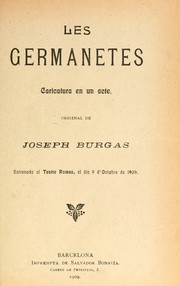 Les germanetesJosep Burgas · 1909
 Tindré un germanet!Maria Solar, Anna Clariana Muntada · 2016
Ranked by number of editions on Open Library, a rough measure of how lasting a book is.
🔗 Related topics
- WordNet WordNet is a lexical database of semantic relations between words that links words into semantic relations including synonyms, hyponyms, and meronyms.…
- Arabic Ontology Arabic Ontology is a website offering linguistic ontology services for the Arabic language which can be used like the online site WordNet. Users can use…
- BabelNet BabelNet is a multilingual lexical-semantic knowledge graph, ontology and encyclopedic dictionary developed at the NLP group of the Sapienza University…
- PlWordNet plWordNet is a lexico-semantic database of the Polish language. It includes sets of synonymous lexical units (synsets) followed by short definitions. plWordNet…
- BulNet The Bulgarian WordNet (BulNet) is an electronic multilingual dictionary of synonym sets along with their explanatory definitions and sets of semantic relations…
- Semantic lexicon A semantic lexicon is a digital dictionary of words labeled with semantic classes so associations can be drawn between words that have not previously been…
- UBY UBY is a large-scale lexical-semantic resource for natural language processing (NLP) developed at the Ubiquitous Knowledge Processing Lab (UKP) in the…
- Lexical resource In digital lexicography, natural language processing, and digital humanities, a lexical resource is a language resource consisting of data regarding the…