Everything about Generative design
Iterative design process

Generative design is an iterative design process that uses software to generate outputs that fulfill a set of constraints iteratively adjusted by a designer. Whether a human, test program, or artificial intelligence, the designer algorithmically or manually refines the feasible region of the program's inputs and outputs with each iteration to fulfill evolving design requirements. By employing computing power to evaluate more design permutations than a human alone is capable of, the process is capable of producing an optimal design that mimics nature's evolutionary approach to design through genetic variation and selection. The output can be images, sounds, architectural models, animation, and much more. It is, therefore, a fast method of exploring design possibilities that is used in various design fields such as art, architecture, communication design, and product design. Wikipedia →
🧭 Start here: a 6-step reading path
- Read the overview: Generative designA 5-minute orientation
- Skim a recent paper: Generalized biomolecular modeling and design with RoseTTAFold All-AtomInfluential work since 2022
- Pick up a classic book: The Internet for DummiesThe most-reprinted book on the subject
- Read the landmark paper: Generating optimal topologies in structural design using a homogenization methodCited 6,585 times
- Go sideways: Parametric designA closely related topic
- Go sideways: Architectural design optimizationA closely related topic
📖 Definitions
No dictionary entry for this exact phrase.
🗂️ The subject at a glance
🏆 Landmark papers (most cited)
Generating optimal topologies in structural design using a homogenization method
Deep Generative Design: Integration of Topology Optimization and Generative Models
A practical generative design method
Towards an integrated generative design framework
Machine learning-aided generative molecular design
Generative Design: An Explorative Study
Deep generative modeling for protein design
What is generative in generative artificial intelligence? A design-based perspective
🆕 Influential since 2022
📚 Books worth reading
 The Internet for DummiesJohn R. Levine, Carol Baroudi · 1993
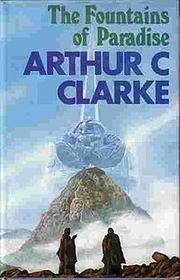 The Fountains of ParadiseArthur C. Clarke · 1978
 陰翳礼讃 (In'ei raisan)谷崎潤一郎 · 1977
 Renewable energy resourcesJohn Twidell, J. W. Twidell · 1986
 A history of graphic designPhilip B. Meggs, Alston W. Purvis · 1983
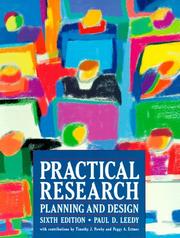 Practical ResearchPaul D. Leedy, Jeanne E. Ormrod · 1974
 The Soul of a New MachineTracy Kidder · 1981
 Analysing ArchitectureSimon Unwin · 1997
Ranked by number of editions on Open Library, a rough measure of how lasting a book is.
🔗 Related topics
- Parametric design Parametric design is a design method in which features, such as building elements and engineering components, are shaped based on algorithmic processes…
- Architectural design optimization Architectural design optimization (ADO) is a subfield of engineering that uses optimization methods to study, aid, and solve architectural design problems…
- Topology optimization Topology optimization is a mathematical method that optimizes material layout within a given design space, for a given set of loads, boundary conditions…
- Design for additive manufacturing Design for additive manufacturing (DfAM or DFAM) is design for manufacturability as applied to additive manufacturing (AM). It is a general type of design…
- Surrogate model A surrogate model is an engineering method used when an outcome of interest cannot be easily measured or computed, so an approximate mathematical model…
- Simulation-based optimization Simulation-based optimization (also known as simply simulation optimization) integrates optimization techniques into simulation modeling and analysis.…
- Computer-aided architectural design Computer-aided architectural design (CAAD) software programs are the repository of accurate and comprehensive records of buildings and are used by architects…
- Space allocation problem In architecture and space planning, the space allocation problem (SAP) is the problem of assigning rooms and other spaces to positions, sizes and shapes…