Live briefing

Everything about Generative adversarial network
Machine learning framework
A generative adversarial network (GAN) is a class of machine learning frameworks and a prominent framework for approaching generative AI. The concept was initially developed by Ian Goodfellow and his colleagues at Université de Montréal in June 2014. In a GAN, two neural networks compete with each other in the form of a zero-sum game, where one agent's gain is another agent's loss. Wikipedia →
🧭 Start here: a 6-step reading path
- Read the overview: Generative adversarial networkA 5-minute orientation
- Skim a recent paper: A Review on Generative Adversarial Networks: Algorithms, Theory, and ApplicationsInfluential work since 2022
- Pick up a classic book: Artificial intelligenceThe most-reprinted book on the subject
- Read the landmark paper: Generative adversarial networksCited 14,822 times
- Go sideways: Wasserstein GANA closely related topic
- Go sideways: Inception scoreA closely related topic
📖 Definitions
Noun A system used in machine learning, consisting of two neural networks, one of which generates candidate solutions to a problem while the other evaluates and accepts or rejects them.
🗂️ The subject at a glance
🏆 Landmark papers (most cited)
Generative adversarial networks
Generative Adversarial Networks: An Overview
Controllable Generative Adversarial Network
Generative Adversarial Network for Abstractive Text Summarization
Tomographic reconstruction with a generative adversarial network
Global citation recommendation employing generative adversarial network
A generative adversarial network for image denoising
Compressive Privacy Generative Adversarial Network
🆕 Influential since 2022
A Review on Generative Adversarial Networks: Algorithms, Theory, and Applications
Generative Adversarial and Self-Supervised Dehazing Network
Self-Adversarial Generative Adversarial Network for Underwater Image Enhancement
Generative Design by Embedding Topology Optimization into Conditional Generative Adversarial Network
A quantum generative adversarial network for distributions
📚 Books worth reading
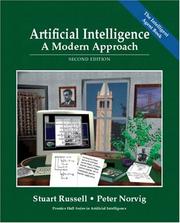 Artificial intelligenceStuart J. Russell, Peter Norvig · 1994
- 📕Generative Adversarial Networks and Deep LearningRoshani Raut, Pranav D Pathak · 2023
- 📕Enhancing Security in Public Spaces Through Generative Adversarial Networks (GANs)Sivaram Ponnusamy, Jilali Antari · 2024
- 📕Generative Adversarial Networks and Super ResolutionManish Jain, Dinesh Sethi · 2022
- 📕Generative Adversarial Networks in PracticeMehdi Ghayoumi · 2023
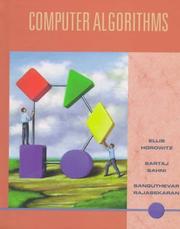 Computer algorithmsEllis Horowitz · 1997
- 📕Exploring Generative Adversarial Networks and Meta-Learning SynergiesSarita Simaiya, Umesh Kumar Lilhore · 2025
 GANs in ActionJakub Langr, Vladimir Bok · 2019
Ranked by number of editions on Open Library, a rough measure of how lasting a book is.
🔗 Related topics
- Wasserstein GAN The Wasserstein Generative Adversarial Network (WGAN) is a variant of generative adversarial network (GAN) proposed in 2017 that aims to "improve the stability…
- Inception score The Inception Score (IS) is an algorithm used to assess the quality of images created by a generative image model such as a generative adversarial network…
- Fréchet inception distance The Fréchet inception distance (FID) is a metric used to assess the quality of images created by a generative model, like a generative adversarial network…
- StyleGAN The Style Generative Adversarial Network, or StyleGAN for short, is an extension to the GAN architecture introduced by Nvidia researchers in December 2018…
- Variational autoencoder In machine learning, a variational autoencoder (VAE) is an artificial neural network architecture introduced by Diederik P. Kingma and Max Welling in 2013…
- Generative model Generative models are a class of computational models frequently used for classification. In machine learning, it typically models the joint distribution…
- Mode collapse In machine learning, mode collapse is a failure mode observed in generative models, originally noted in Generative Adversarial Networks (GANs). It occurs…
- Energy-based model An energy-based model (EBM), also called Canonical Ensemble Learning (CEL) or Learning via Canonical Ensemble (LCE), is an application of canonical ensemble…