Everything about Generalized Hebbian algorithm
Linear feedforward neural network model
The generalized Hebbian algorithm, also known in the literature as Sanger's rule, is a linear feedforward neural network for unsupervised learning with applications primarily in principal components analysis. First defined in 1989, it is similar to Oja's rule in its formulation and stability, except it can be applied to networks with multiple outputs. The name originates because of the similarity between the algorithm and a hypothesis made by Donald Hebb about the way in which synaptic strengths in the brain are modified in response to experience, i.e., that changes are proportional to the correlation between the firing of pre- and post-synaptic neurons. Wikipedia →
🧭 Start here: a 6-step reading path
- Read the overview: Generalized Hebbian algorithmA 5-minute orientation
- Pick up a classic book: Neuro-fuzzy and soft computingThe most-reprinted book on the subject
- Read the landmark paper: Analysis of the two-dimensional receptive fields learned by the Generalized Hebbian Algorithm in response to random inputCited 26 times
- Go sideways: Oja's ruleA closely related topic
- Go sideways: Synaptic weightA closely related topic
📖 Definitions
No dictionary entry for this exact phrase.
🗂️ The subject at a glance
🏆 Landmark papers (most cited)
Analysis of the two-dimensional receptive fields learned by the Generalized Hebbian Algorithm in response to random input
An Efficient VLSI Architecture for Multi-Channel Spike Sorting Using a Generalized Hebbian Algorithm
Efficient hardware architecture based on generalized Hebbian algorithm for texture classification
Parallel Generalized Hebbian Algorithm for Large Scale Data Analytics
Fuzzy Generalized Hebbian Algorithm for Large-Scale Intrusion Detection System
FPGA Implementation of Generalized Hebbian Algorithm for Texture Classification
An effective classification approach for big data with parallel generalized Hebbian algorithm
High-Level Synthesis-Based FPGA Hardware Accelerator for Generalized Hebbian Learning Algorithm for Neuromorphic Computing
📚 Books worth reading
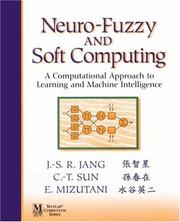 Neuro-fuzzy and soft computingJyh-Shing Roger Jang, Chuen-Tsai Sun · 1996
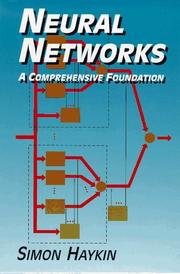 Neural networksSimon S. Haykin · 1994
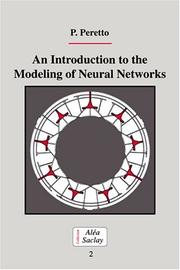 An introduction to the modeling of neural networksPierre Peretto · 1992
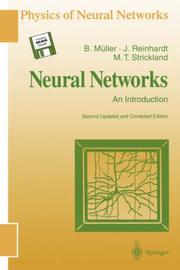 Neural networksBerndt Müller, Joachim Reinhardt · 1995
 Introduction to artificial neural systemsJacek M. Zurada · 1992
Ranked by number of editions on Open Library, a rough measure of how lasting a book is.
🔗 Related topics
- Oja's rule Oja's learning rule, or simply Oja's rule, named after Finnish computer scientist Erkki Oja (Finnish pronunciation: [ˈojɑ], AW-yuh), is a model of how…
- Synaptic weight In neuroscience and computer science, synaptic weight refers to the strength or amplitude of a connection between two nodes, corresponding in biology to…
- Hebbian theory Hebbian theory is a neuropsychological theory claiming that an increase in synaptic efficacy arises from a presynaptic cell's repeated and persistent stimulatio…
- Backpropagation In machine learning, backpropagation is a gradient computation method commonly used for training a neural network in computing parameter updates. It is…
- Competitive learning Competitive learning is a form of unsupervised learning in artificial neural networks, in which nodes compete for the right to respond to a subset of the…
- Learning rule An artificial neural network's learning rule or learning process is a method, mathematical logic or algorithm which improves the network's performance…
- Anti-Hebbian learning In neuroethology and the study of learning, anti-Hebbian learning describes a particular class of learning rule by which synaptic plasticity can be controlled…
- Unsupervised learning Unsupervised learning is a framework in machine learning where, in contrast to supervised learning, algorithms learn patterns exclusively from unlabeled…