Live briefing

Everything about Gaussian integer
Complex number whose real and imaginary parts are both integers
In number theory, a Gaussian integer is a complex number whose real and imaginary parts are both integers. The Gaussian integers, with ordinary addition and multiplication of complex numbers, form an integral domain, usually written as or Wikipedia →
🧭 Start here: a 6-step reading path
- Read the overview: Gaussian integerA 5-minute orientation
- Skim a recent paper: Multiple color images security by SPN over the residue classes of Gaussian integer $$\:Z{\left[i\right]}_{h}$$Influential work since 2022
- Pick up a classic book: A first course in abstract algebraThe most-reprinted book on the subject
- Read the landmark paper: Dealing with categorical and integer-valued variables in Bayesian Optimization with Gaussian processesCited 248 times
- Go sideways: Euclidean domainA closely related topic
- Go sideways: Euclidean algorithmA closely related topic
📖 Definitions
No dictionary entry for this exact phrase.
🏆 Landmark papers (most cited)
Dealing with categorical and integer-valued variables in Bayesian Optimization with Gaussian processes
Gaussian Integer Sequences With Ideal Periodic Autocorrelation Functions
Sylvester's Identity and Multistep Integer-Preserving Gaussian Elimination
Perfect Gaussian Integer Sequences of Odd Prime Length
Single integral representations of certain integer powers of the Gaussian Q-function and their application
A Systematic Method for Constructing Sparse Gaussian Integer Sequences With Ideal Periodic Autocorrelation Functions
Perfect Gaussian Integer Sequences of Arbitrary Length
Perfect Gaussian Integer Sequences of Arbitrary Composite Length
🆕 Influential since 2022
Multiple color images security by SPN over the residue classes of Gaussian integer $$\:Z{\left[i\right]}_{h}$$
Quantitative bounds on vortex fluctuations in 2d$2d$ Coulomb gas and maximum of the integer‐valued Gaussian free field
On the integrality gap of binary integer programs with Gaussian data
Three-dimensional Gaussian product inequality with positive integer order moments
An Algorithm for Finding Self-Orthogonal and Self-Dual Codes Over Gaussian and Eisenstein Integer Residue Rings Via Chinese Remainder Theorem
📚 Books worth reading
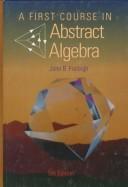 A first course in abstract algebraJohn B. Fraleigh · 1967
 Mathematical structures for computer scienceJudith L. Gersting · 1982
 A First Course in Abstract Algebra [Seventh 7th Edition]John B. Fraleigh · 1969
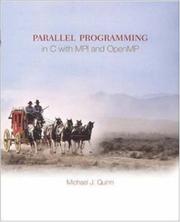 Parallel Programming in C with MPI and OpenMPMichael J. Quinn · 2003
 Classical and Quantum Information TheoryEmmanuel Desurvire · 2009
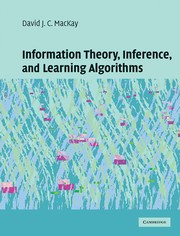 Information Theory, Inference & Learning AlgorithmsDavid J.C. MacKay · 2003
 Introduction to Programming in JavaRobert Sedgewick, Kevin Wayne · 2007
 Coding the MatrixPhilip N. Klein · 2013
Ranked by number of editions on Open Library, a rough measure of how lasting a book is.
🔗 Related topics
- Euclidean domain In mathematics, more specifically in ring theory, a Euclidean domain (also called a Euclidean ring) is an integral domain that can be endowed with a Euclidean…
- Euclidean algorithm In mathematics, the Euclidean algorithm, or Euclid's algorithm, is an efficient method for computing the greatest common divisor (GCD) of two integers…
- Principal ideal domain In mathematics, a principal ideal domain, or PID, is an integral domain (that is, a non-zero commutative ring without nonzero zero divisors) in which every…
- Modular arithmetic In mathematics, modular arithmetic is a system of arithmetic operations for integers, differing from the usual ones in that numbers "wrap around" when…
- Hurwitz quaternion In mathematics, a Hurwitz quaternion (or Hurwitz integer) is a quaternion whose components are either all integers or all half-integers (halves of odd…
- Eisenstein integer In mathematics, the Eisenstein integers (named after Gotthold Eisenstein), occasionally also known as Eulerian integers (after Leonhard Euler), are the…
- Fermat's theorem on sums of two squares In additive number theory, Fermat's theorem on sums of two squares states that an odd prime p can be expressed as: p=x2+y2, with x and y integers, if and…
- Fundamental theorem of arithmetic In mathematics, the fundamental theorem of arithmetic, also called the unique factorization theorem and prime factorization theorem, states that every…