Live briefing
Everything about Functional reactive programming
Programming paradigm
Functional reactive programming (FRP) is a programming paradigm for reactive programming using the building blocks of functional programming. FRP has been used for programming graphical user interfaces (GUIs), robotics, games, and music, aiming to simplify these problems by explicitly modeling time. Wikipedia →
🧭 Start here: a 6-step reading path
- Read the overview: Functional reactive programmingA 5-minute orientation
- Skim a recent paper: Reactive Programming without FunctionsInfluential work since 2022
- Pick up a classic book: Software EngineeringThe most-reprinted book on the subject
- Read the landmark paper: Functional reactive programming from first principlesCited 43 times
- Go sideways: Arrow (computer science)A closely related topic
- Go sideways: HaskellA closely related topic
📖 Definitions
No dictionary entry for this exact phrase.
🗂️ The subject at a glance
🏆 Landmark papers (most cited)
Functional reactive programming from first principles
Asynchronous functional reactive programming for GUIs
Testing and debugging functional reactive programming
Towards a Common Categorical Semantics for Linear-Time Temporal Logic and Functional Reactive Programming
Higher-order functional reactive programming without spacetime leaks
Functional reactive programming, refactored
Modal FRP for all: Functional reactive programming without space leaks in Haskell
Fault tolerant functional reactive programming (functional pearl)
🆕 Influential since 2022
📚 Books worth reading
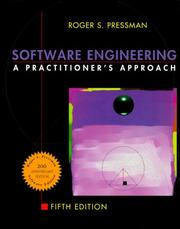 Software EngineeringRoger S. Pressman, Bruce Maxim · 1982
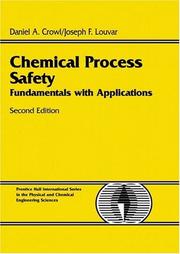 Chemical Process SafetyDaniel A. Crowl, Joseph F. Louvar · 1989
 Treaty Occupationay ToxicologySuelen Queiroz · 2010
 Human cytomegalovirusesAndrew D. Yurochko · 2014
 Practical Electronics for InventorsPaul Scherz · 2000
- 📕Cell deathGerry Melino, David Vaux · 2010
 Functional Reactive ProgrammingStephen Blackheath, Anthony Jones · 2016
- 📕Learn Scala ProgrammingSlava Schmidt · 2018
Ranked by number of editions on Open Library, a rough measure of how lasting a book is.
🔗 Related topics
- Arrow (computer science) In computer science, arrows or bolts are a type class used in computer programming to describe computations in a pure and declarative fashion. First proposed…
- Haskell Haskell (/ˈhæskəl/) is a general-purpose, statically typed, purely functional programming language with type inference and lazy evaluation. Haskell pioneered…
- Monad (functional programming) In functional programming, monads are a way to structure computations as a sequence of steps, where each step produces a value, plus some extra information…
- ReactiveX ReactiveX (Rx, also known as Reactive Extensions) is a software library originally created by Microsoft that allows imperative programming languages to…
- WxHaskell wxHaskell is a portable and native graphical user interface (GUI) library for the programming language Haskell, built on wxWidgets. It is often used by…
- Glasgow Haskell Compiler The Glasgow Haskell Compiler (GHC) is a native or machine code compiler for the functional programming language Haskell. It provides a cross-platform software…
- Reactive programming In computing, reactive programming is a declarative programming paradigm concerned with data streams and the propagation of change. With this paradigm…
- Elm (programming language) Elm is a domain-specific programming language for declaratively creating web browser-based graphical user interfaces. Elm is purely functional, and is…