Live briefing
Everything about Function composition (computer science)
Programming mechanism
In computer science, function composition is an act or mechanism to combine simple functions to build more complex ones. Like the usual composition of functions in mathematics, the result of each function is passed as the argument of the next, and the result of the last one is the result of the whole. Wikipedia →
🧭 Start here: a 6-step reading path
- Read the overview: Function composition (computer science)A 5-minute orientation
- Pick up a classic book: Learning PythonThe most-reprinted book on the subject
- Go sideways: Higher-order functionA closely related topic
- Go sideways: Examples of anonymous functionsA closely related topic
📖 Definitions
No dictionary entry for this exact phrase.
🏆 Landmark papers (most cited)
- No matching papers found.
📚 Books worth reading
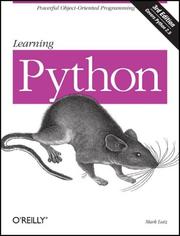 Learning PythonMark Lutz, David Ascher · 1999
 Mathematical structures for computer scienceJudith L. Gersting · 1982
 C++ ProgrammingD. S. Malik · 2004
 Discrete and combinatorial mathematicsRalph P. Grimaldi · 1985
 Optimization in Engineering SciencesPierre Borne, Abdelkader El Kamel · 2012
 Mobile Networks and ManagementAndreas Timm-Giel · 2013
 An introduction to computer scienceJean-Paul Tremblay, Richard B. Bunt · 1979
 Campbell biologyLisa A. Urry, Michael L. Cain · 2015
Ranked by number of editions on Open Library, a rough measure of how lasting a book is.
🔗 Related topics
- Higher-order function In mathematics and computer science, a higher-order function (HOF) is a function that does at least one of the following: takes one or more functions as…
- Examples of anonymous functions In computer programming, an anonymous function (function literal, lambda function, or block) is a function definition that is not bound to an identifier…
- Monad (functional programming) In functional programming, monads are a way to structure computations as a sequence of steps, where each step produces a value, plus some extra information…
- Closure (computer programming) In programming languages, a closure, also lexical closure or function closure, is a technique for implementing lexically scoped name binding in a language…
- Tacit programming Tacit programming, also called point-free style, is a programming paradigm in which function definitions do not identify the arguments (or "points") on…
- Function application In mathematics, function application (or evaluation) is the act of taking a function and an input from its domain to obtain the corresponding value from…
- Operator (computer programming) In computer programming, an operator is a programming language construct that provides functionality that may not be possible to define as a user-defined…
- Callable object A callable object, in computer programming, is any object that can be called like a function. pointer to function; pointer to member function; functor;…