Everything about Freeware
Software distributed and used at no cost, with other rights still reserved
Freeware is software, often proprietary, that is distributed at no monetary cost to the end user. There is no agreed-upon set of rights, license, or EULA that defines freeware unambiguously; every publisher defines its own rules for the freeware it offers. For instance, modification, redistribution by third parties, and reverse engineering are permitted by some publishers but prohibited by others. Unlike with free and open-source software, which are also often distributed free of charge, the source code for freeware is typically not made available. Freeware may be intended to benefit its producer by, for example, encouraging sales of a more capable version, as in the freemium and shareware business models; or by collecting and selling users' personal data. Wikipedia →
🧭 Start here: a 6-step reading path
- Read the overview: FreewareA 5-minute orientation
- Skim a recent paper: Accuracy of a Smartphone-based freeware solution and two shape reconstruction algorithms in log volume measurementsInfluential work since 2022
- Pick up a classic book: Digital music making for teensThe most-reprinted book on the subject
- Read the landmark paper: Iolite: Freeware for the visualisation and processing of mass spectrometric dataCited 4,331 times
- Go sideways: SharewareA closely related topic
- Go sideways: Software categoriesA closely related topic
📖 Definitions
Noun Complete and functional software that does not require payment or other compensation (such as viewing advertising) for its use. Freeware may be a proprietary license with no access to the source code.
🗂️ The subject at a glance
🏆 Landmark papers (most cited)
Iolite: Freeware for the visualisation and processing of mass spectrometric data
LIFEx: A Freeware for Radiomic Feature Calculation in Multimodality Imaging to Accelerate Advances in the Characterization of Tumor Heterogeneity
GInaFiT, a freeware tool to assess non-log-linear microbial survivor curves
Apollo: A flexible, powerful and customisable freeware package for choice model estimation and application
Reference Value Advisor: a new freeware set of macroinstructions to calculate reference intervals with Microsoft Excel
Iso-Compass: new freeware software for isotopic data reduction of LA-MC-ICP-MS
Construction and bootstrap analysis of DNA fingerprinting-based phylogenetic trees with the freeware program FreeTree: application to trichomonad parasites.
User-Friendly Differential Voltage Analysis Freeware for the Analysis of Degradation Mechanisms in Li-Ion Batteries
🆕 Influential since 2022
Accuracy of a Smartphone-based freeware solution and two shape reconstruction algorithms in log volume measurements
DrYFiT : An Excel Freeware Tool to Describe Thin Layer Drying of Foods
Inter-software and inter-scan variability in measurement of epicardial adipose tissue: a three-way comparison of a research-specific, a freeware and a coronary application software platform
Technical note: A freeware, equitable approach to dental topographic analysis
Brama: a new freeware Python software for reduction and imaging of LA-ICP-MS data from U–Pb scans
📚 Books worth reading
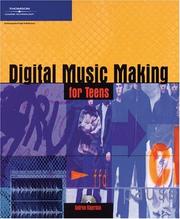 Digital music making for teensAndrew Hagerman · 2005
Ranked by number of editions on Open Library, a rough measure of how lasting a book is.
🔗 Related topics
- Shareware Shareware is proprietary software that is initially shared by the owner for trial use at little or no cost. Often the software has limited functionality…
- Software categories Software categories are groups of software. They allow software to be understood in terms of those categories, instead of the particularities of each package…
- PC-Talk PC-Talk is a communications software program. It was one of the first three widely popular software products sold via the marketing method that became…
- Proprietary software Proprietary software is software that grants its creator, publisher, or other rightsholder or rightsholder partner a legal monopoly by modern copyright…
- Freely redistributable software Freely redistributable software (FRS) is software that anyone is free to redistribute. The term has been used to mean two types of free-to-redistribute…
- Courier (email client) Courier (also known as Courier Email) was an email client for Microsoft Windows. The software was originally released in 1996 as Calypso by Micro Computer…
- Photoshop plugin Photoshop plugins (or plug-ins) are add-on programs aimed at providing additional image effects or performing tasks that are impossible or hard to fulfill…
- Adobe Acrobat Adobe Acrobat is a family of application software and web services developed by Adobe Inc. to view, create, manipulate, print and manage Portable Document…