Live briefing

Everything about Fortran
General-purpose programming language
Fortran is a third-generation, compiled, imperative programming language designed for numeric computation and scientific computing. Wikipedia →
🧭 Start here: a 6-step reading path
- Read the overview: FortranA 5-minute orientation
- Skim a recent paper: PathSum : A C++ and Fortran suite of fully quantum mechanical real-time path integral methods for (multi-)system + bath dynamicsInfluential work since 2022
- Pick up a classic book: Classical FORTRANThe most-reprinted book on the subject
- Read the landmark paper: CONISS: a FORTRAN 77 program for stratigraphically constrained cluster analysis by the method of incremental sum of squaresCited 3,023 times
- Go sideways: PL/IA closely related topic
- Go sideways: WATFIVA closely related topic
📖 Definitions
No dictionary entry for this exact phrase.
🏆 Landmark papers (most cited)
CONISS: a FORTRAN 77 program for stratigraphically constrained cluster analysis by the method of incremental sum of squares
PARST95 – an update to PARST: a system of Fortran routines for calculating molecular structure parameters from the results of crystal structure analyses
Parst: A system of fortran routines for calculating molecular structure parameters from results of crystal structure analyses
BIOSYS-1: a FORTRAN program for the comprehensive analysis of electrophoretic data in population genetics and systematics
Basic Linear Algebra Subprograms for Fortran Usage
A Fortran package for generalized, cross-validatory spline smoothing and differentiation
Capabilities and limitations of a current FORTRAN implementation of the T-matrix method for randomly oriented, rotationally symmetric scatterers
NLPQL: A fortran subroutine solving constrained nonlinear programming problems
🆕 Influential since 2022
PathSum : A C++ and Fortran suite of fully quantum mechanical real-time path integral methods for (multi-)system + bath dynamics
A CUDA Fortran GPU-parallelised hydrodynamic tool for high-resolution and long-term eco-hydraulic modelling
The State of Fortran
Large-Scale direct numerical simulations of turbulence using GPUs and modern Fortran
FTorch: a library for coupling PyTorch models to Fortran
📚 Books worth reading
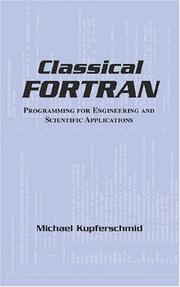 Classical FORTRANMichael Kupferschmid · 2002
 FortranElliot B. Koffman, Frank L. Friedman · 1992
 FORTRAN 77 for engineers and scientistsLarry R. Nyhoff, Larry Nyhoff · 1985
 Structured FORTRAN 77 for engineers and scientistsD. M. Etter · 1983
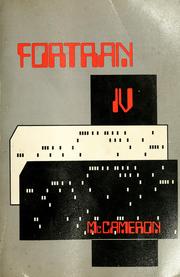 FORTRAN IVFritz A. McCameron · 1970
 Numerical mathematics and computingCheney, E. W. · 1980
 Fortran IV self-taughtMario V. Farina · 1966
 Modern Fortran explainedMichael Metcalf, John Reid · 2011
Ranked by number of editions on Open Library, a rough measure of how lasting a book is.
🔗 Related topics
- PL/I PL/I (Programming Language One, pronounced /piː ɛl wʌn/ and sometimes written PL/1) is a procedural, imperative computer programming language initially…
- WATFIV WATFOR and WATFIV (variously, Waterloo FORTRAN or Waterloo FORTRAN IV), developed in Canada at the University of Waterloo, are implementations of the Fortran…
- C (programming language) C is a general-purpose programming language created in 1972 by Dennis Ritchie. By design, C gives programmers relatively direct access to the features…
- Pascal (programming language) Pascal is an imperative and procedural programming language, designed by Niklaus Wirth as a small, efficient language intended to encourage good programming…
- COBOL COBOL (Common Business-Oriented Language; /ˈkoʊbɒl, -bɔːl/) is a compiled English-like computer programming language designed for business use. It is an…
- Comparison of programming languages Programming languages are used for controlling the behavior of a machine (often a computer). Like natural languages, programming languages follow rules…
- Absoft Absoft Corporation was an American software company active from 1980 to 2022. They were best known for their set of Fortran compilers for Microsoft Windows…
- EBCDIC Extended Binary Coded Decimal Interchange Code (EBCDIC; /ˈɛbsɪdɪk/) is an eight-bit character encoding used mainly on IBM mainframe and IBM midrange computer…