Live briefing
Everything about Formulaic language
Utterances with fixed forms and often non-literal meaning
Formulaic language is a linguistic term for verbal expressions that are fixed in form, often non-literal in meaning, with attitudinal nuances, and closely related to communicative-pragmatic context. Wikipedia →
🧭 Start here: a 6-step reading path
- Read the overview: Formulaic languageA 5-minute orientation
- Skim a recent paper: Formulaic language identification model based on GCN fusing associated informationInfluential work since 2022
- Pick up a classic book: George's Marvelous MedicineThe most-reprinted book on the subject
- Read the landmark paper: The functions of formulaic language: an integrated modelCited 385 times
- Go sideways: Speech disfluencyA closely related topic
- Go sideways: Jean E. Fox TreeA closely related topic
📖 Definitions
No dictionary entry for this exact phrase.
🗂️ The subject at a glance
🏆 Landmark papers (most cited)
The functions of formulaic language: an integrated model
A corpus-driven approach to formulaic language in English
Formulaic Language in Learner Corpora
Formulaic Language and Second Language Acquisition: Zipf and the Phrasal Teddy Bear
The Processing of Formulaic Language
The Role of Formulaic Language in Second Language Acquisition: A Review
Is All Formulaic Language Created Equal? Unpacking the Processing Advantage for Different Types of Formulaic Sequences
Formulaic language in learners and native speakers
🆕 Influential since 2022
Formulaic language identification model based on GCN fusing associated information
Norbert Schmitt's essential bookshelf: Formulaic language
The noticing hypothesis and formulaic language. Learnability of non-salient language forms
The role of psycholinguistics for language learning in teaching based on formulaic sequence use and oral fluency
Beyond words in evaluation: Formulaic language in critical reviews of research articles across disciplines
📚 Books worth reading
 George's Marvelous MedicineRoald Dahl · 1981
 De medicinaAulus Cornelius Celsus, Celse · 1478
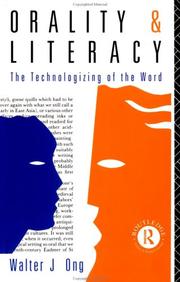 Orality and LiteracyWalter J. Ong · 1982
- 📕LaghusiddhāntakaumudīVaradarāja · 1950
 The making of Homeric verseMilman Parry · 1971
 The literate revolution in Greece and its cultural consequencesEric Alfred Havelock · 1982
 Discontinuous syntaxA. M. Devine · 1999
- 📕Facts and how to find themWilliam Alfred Bagley · 1938
Ranked by number of editions on Open Library, a rough measure of how lasting a book is.
🔗 Related topics
- Speech disfluency A speech disfluency, also spelled speech dysfluency, is any of various breaks, irregularities, or non-lexical vocables which occur within the flow of otherwise…
- Jean E. Fox Tree Jean E. Fox Tree is a professor in the Department of Psychology at the University of California, Santa Cruz. Fox Tree studies collateral signals that people…
- Prosody (linguistics) In linguistics, prosody (/ˈprɒsədi, ˈprɒz-/) is the study of those elements of speech, including intonation, stress, rhythm and loudness, that occur simultaneou…
- Filled pause A filled pause is a non-silent pause in otherwise fluent speech, where instead of a silent pause there is a filler. The filler can be non-lexical or semiarticul…
- Apraxia of speech Apraxia of speech (AOS), also called verbal apraxia, is a speech sound disorder affecting an individual's ability to translate conscious speech plans into…
- Vocable In the broadest sense of the word, a vocable (from Latin: vocabulum) is any identifiable utterance or writing, such as a word or term, that is fixed by…
- Speech perception Speech perception is the process by which the sounds of language are heard, interpreted, and understood. The study of speech perception is closely linked…
- Speech error A speech error, commonly referred to as a slip of the tongue (Latin: lapsus linguae, or occasionally self-demonstratingly, lipsus languae) or misspeaking…