Live briefing

Everything about Flight
Movement of an object through air
Flight or flying is the motion of an object through an atmosphere or through the vacuum of space, in this case also called spaceflight, without contacting any planetary surface. This can be achieved by generating aerodynamic lift associated with gliding or propulsive thrust, aerostatically using buoyancy, or by ballistic movement. Wikipedia →
🧭 Start here: a 6-step reading path
- Read the overview: FlightA 5-minute orientation
- Skim a recent paper: The challenges and opportunities of battery-powered flightInfluential work since 2022
- Pick up a classic book: De la terre à la luneThe most-reprinted book on the subject
- Read the landmark paper: Time-of-Flight Mass Spectrometer with Improved ResolutionCited 3,462 times
- Go sideways: Unpowered aircraftA closely related topic
- Go sideways: Fixed-wing aircraftA closely related topic
📖 Definitions
Noun The act of flying; the ability to fly.
Noun An instance of flying.
Noun The trajectory or passage through air or space of a projectile, ship, etc.
Noun A swift movement, especially as to escape; an escape.
🗂️ The subject at a glance
🏆 Landmark papers (most cited)
Time-of-Flight Mass Spectrometer with Improved Resolution
Collective Mind in Organizations: Heedful Interrelating on Flight Decks
Protein and polymer analyses up to m/z 100 000 by laser ionization time‐of‐flight mass spectrometry
Biobehavioral responses to stress in females: Tend-and-befriend, not fight-or-flight.
Wing Rotation and the Aerodynamic Basis of Insect Flight
Field-Deployable, High-Resolution, Time-of-Flight Aerosol Mass Spectrometer
Estimation of optical pathlength through tissue from direct time of flight measurement
TheHerschel-SPIRE instrument and its in-flight performance
🆕 Influential since 2022
The challenges and opportunities of battery-powered flight
What Will the Future of UAV Cellular Communications Be? A Flight From 5G to 6G
Performance of NIRCam on JWST in Flight
The Mid-infrared Instrument for JWST and Its In-flight Performance
Neural-Fly enables rapid learning for agile flight in strong winds
📚 Books worth reading
 De la terre à la luneJules Verne · 1865
 Charlie and the Great Glass ElevatorRoald Dahl · 1972
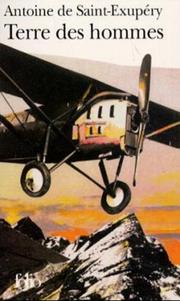 Terre des hommesAntoine de Saint-Exupéry · 1936
 The First Men in the MoonH. G. Wells · 1900
 The Illustrated ManRay Bradbury · 1951
 The TommyknockersStephen King · 1985
 The Skylark of SpaceEdward E. Smith · 1946
 The Stars, Like DustIsaac Asimov · 1951
Ranked by number of editions on Open Library, a rough measure of how lasting a book is.
🔗 Related topics
- Unpowered aircraft Unpowered aircraft is an aircraft without onboard propulsion that can remain airborne for a significant period of time. Such aircraft typically maintain…
- Fixed-wing aircraft A fixed-wing aircraft is a heavier-than-air aircraft, such as an airplane, which is capable of flight using aerodynamic lift. Fixed-wing aircraft are distinct…
- Gliding flight Gliding flight is heavier-than-air flight without the use of thrust; the term volplaning also refers to this mode of flight in animals. It is employed…
- Glider (sailplane) A glider or sailplane is a type of glider aircraft used in the leisure activity and sport of gliding (also called soaring). This unpowered aircraft can…
- Hybrid airship A hybrid airship is a powered aircraft that obtains some of its lift as a lighter-than-air (LTA) airship and some from aerodynamic lift as a heavier-than-air…
- Aircraft An aircraft or aerial vehicle is a vehicle that can fly by gaining support from the air. It counters the force of gravity by using either static lift or…
- Glider (aircraft) A glider is a fixed-wing aircraft that is supported in flight by the dynamic reaction of the air against its lifting surfaces, and whose free flight does…
- Lift-to-drag ratio In aerodynamics, the lift-to-drag ratio (or L/D ratio) is the lift generated by an aerodynamic body such as an aerofoil or aircraft, divided by the aerodynamic…