Everything about Fingerboard
String instrument part
The fingerboard is an important component of most stringed instruments. It is a thin, long strip of material, usually wood, that is laminated to the front of the neck of an instrument. The strings run over the fingerboard, between the nut and bridge. In playing the instrument, a musician presses strings down to the fingerboard to change the vibrating length, changing the pitch. This is called stopping the strings. Depending on the instrument and the style of music, the musician may pluck, strum or bow one or more strings with the hand that is not fretting the notes. On some instruments, notes can be sounded by the fretting hand alone, such as with hammer ons, an electric guitar technique. Wikipedia →
🧭 Start here: a 6-step reading path
- Read the overview: FingerboardA 5-minute orientation
- Skim a recent paper: Assessing the Impact of Neuromuscular Electrical Stimulation-Based Fingerboard Training versus Conventional Fingerboard Training on Finger Flexor Endurance in Intermediate to Advanced Sports Climbers: A Randomized Controlled StudyInfluential work since 2022
- Pick up a classic book: Violin Fingerboard MasteryThe most-reprinted book on the subject
- Read the landmark paper: Fingerboard in Competitive BoulderingCited 55 times
- Go sideways: FretA closely related topic
- Go sideways: GuitarA closely related topic
📖 Definitions
Noun A flat or roughly flat strip on the neck of a stringed instrument, against which the strings are pressed to shorten the vibrating length and produce notes of higher pitches.
Noun A miniature skateboard or snowboard that is propelled by the fingers.
Noun Synonym of hangboard (“device for building finger strength”).
🗂️ The subject at a glance
🏆 Landmark papers (most cited)
Fingerboard in Competitive Bouldering
Influence of the Electric Guitar's Fingerboard Wood on Guitarists' Perception
The research on 3D printing fingerboard and the initial application on cerebral stroke patient’s hand spasm
Fingerboard Media Development Calculate for the Cognitive Improvement of Teachers at RA Muslimat NU 1 Tulus Rejo
Four-week of local electromyostimulaiton training on fingerboard increases the isokinetic wrist strength and endurance
The effect of the coupling between the top plate and the fingerboard on the acoustic power radiated by a classical guitar (L)
Violin Fingerboard Space
Randomized Controlled Study of 3D Print Fingerboard and Traditional Fingerboard on Treatment of Stroke Patients with Finger Spasm
🆕 Influential since 2022
Assessing the Impact of Neuromuscular Electrical Stimulation-Based Fingerboard Training versus Conventional Fingerboard Training on Finger Flexor Endurance in Intermediate to Advanced Sports Climbers: A Randomized Controlled Study
On Fingerboard Shapes, Violinistic Chord Spacings and Instrumental Affordances in the Adagio of J. S. Bach's Violin Sonata in G minor, BWV 1001
Bilateral Deficit Using a Climbing-Specific Fingerboard Test and Its Association with Sport Climbers’ Performance
The Use of Fingerboard Media to Improve the Ability to Count Addition Operations in Grade V Intellectual Disability Students at SDLB Sumber Dharma Malang City
📚 Books worth reading
- 📕Violin Fingerboard MasteryJason Jason Anick · 2022
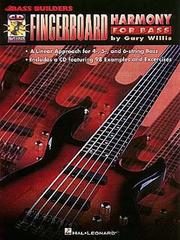 Fingerboard Harmony for BassGary Willis · 1997
- 📕Fingerboard Geometry Volume TwoKimberly Allison · 2024
- 📕Fingerboard Workbook for the Ninth, Tenth and Eleventh PositionsDiane Allen · 2011
- 📕The Yost system for violinGaylord Yost · 1934
- 📕The fingerboard workbookAndrew Caponigro · 1970
- 📕Contemporary Guitar Improvisation (Utilizing the Entire Fingerboard)Marc Silver · 1985
 5 Ply Fingerboard Magazine April 2011Bobby Alexander · 2011
Ranked by number of editions on Open Library, a rough measure of how lasting a book is.
🔗 Related topics
- Fret A fret is any of the thin strips of material, usually metal wire, inserted laterally at specific positions along the neck or fretboard of a stringed instrument…
- Guitar The guitar is a stringed musical instrument that is usually fretted (with some exceptions) and typically has six or twelve strings, though guitars with…
- Truss rod The truss rod is a component of a guitar or other stringed instrument that stabilizes the lengthwise forward curvature (also called relief) of the neck…
- Neck (music) The neck is the part of certain string instruments that projects from the main body and is the base of the fingerboard, where the fingers are placed to…
- Nut (string instrument) The nuts of some common instruments A nut, on a stringed musical instrument, is a small piece of hard material that supports the strings at the end closest…
- Multi-scale fingerboard A multi-scale fingerboard (also called multiple scale length fretboard) is an instrument fretboard which incorporates multiple scale lengths. This allows…
- Action (music) In the description of musical instruments, the term action has two completely different meanings. In keyboard instruments, the action is the mechanism…
- Zither Zither (/ˈzɪð.ər, ˈzɪθ.-/; German: [ˈtsɪtɐ], from the Greek κιθάρα, cithara) is a class of stringed instruments, and the term also refers to a specific…