Everything about Filtration
Process that separates solids from fluids

Filtration is a physical separation process that separates solid matter and fluid from a mixture using a filter medium that has a complex structure through which only the fluid can pass. Solid particles that cannot pass through the filter medium are described as oversize and the fluid that passes through is called the filtrate. Oversize particles may form a filter cake on top of the filter and may also block the filter lattice, preventing the fluid phase from crossing the filter, known as blinding. The size of the largest particles that can successfully pass through a filter is called the effective pore size of that filter. The separation of solid and fluid is imperfect; solids will be contaminated with some fluid and filtrate will contain fine particles. Filtration occurs both in nature and in engineered systems; there are biological, geological, and industrial forms. In everyday usage the verb "strain" is more often used; for example, using a colander to drain cooking water from cooked pasta. Wikipedia →
🧭 Start here: a 6-step reading path
- Read the overview: FiltrationA 5-minute orientation
- Skim a recent paper: Estimated Glomerular Filtration Rate, Albuminuria, and Adverse OutcomesInfluential work since 2022
- Pick up a classic book: The filtration of public water-suppliesThe most-reprinted book on the subject
- Read the landmark paper: A New Equation to Estimate Glomerular Filtration RateCited 23,121 times
- Go sideways: Gravity filtrationA closely related topic
- Go sideways: Depth filterA closely related topic
📖 Definitions
Noun The act or process of filtering; the mechanical separation of a liquid from the undissolved particles floating in it.
Noun A totally ordered collection of subsets.
🗂️ The subject at a glance
🏆 Landmark papers (most cited)
A New Equation to Estimate Glomerular Filtration Rate
A More Accurate Method To Estimate Glomerular Filtration Rate from Serum Creatinine: A New Prediction Equation
Using Standardized Serum Creatinine Values in the Modification of Diet in Renal Disease Study Equation for Estimating Glomerular Filtration Rate
Estimating Glomerular Filtration Rate from Serum Creatinine and Cystatin C
Association of estimated glomerular filtration rate and albuminuria with all-cause and cardiovascular mortality in general population cohorts: a collaborative meta-analysis
Flexible Graphene Films via the Filtration of Water-Soluble Noncovalent Functionalized Graphene Sheets
Estimation of the molecular weights of proteins by Sephadex gel-filtration
Assessing Kidney Function — Measured and Estimated Glomerular Filtration Rate
🆕 Influential since 2022
Estimated Glomerular Filtration Rate, Albuminuria, and Adverse Outcomes
Recent advances in membrane filtration for heavy metal removal from wastewater: A mini review
Comparative analysis of tangential flow filtration and ultracentrifugation, both combined with subsequent size exclusion chromatography, for the isolation of small extracellular vesicles
Multi-hierarchical nanofiber membrane with typical curved-ribbon structure fabricated by green electrospinning for efficient, breathable and sustainable air filtration
Electrospun Nanofiber Membranes for Air Filtration: A Review
📚 Books worth reading
 The filtration of public water-suppliesAllen Hazen · 1895
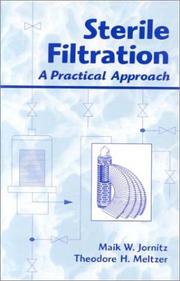 Sterile filtrationMaik W. Jornitz, Theodore H. Meltzer · 2001
 Characterization of particles in filter effluentsJonathan Brandt, Helene Lecoanet · 2007
 The quest for pure waterM. N. Baker, M. N. Baker · 1948
 The MBR bookSimon Judd · 2006
- 📕Filtration and Purification in the Biopharmaceutical Industry, Third EditionMaik W. Jornitz · 2019
- 📕Industrial filtration of liquidsDerek B. Purchas · 1967
- 📕Characterization and performance of filter media for manganese controlJohn E. Tobiason · 2008
Ranked by number of editions on Open Library, a rough measure of how lasting a book is.
🔗 Related topics
- Gravity filtration Gravity filtration is a method of filtering impurities from solutions by using gravity to pull liquid through a filter. The two main kinds of filtration…
- Depth filter Depth filters are filters that use a porous filtration medium to retain particles throughout the medium, rather than just on the surface of the medium…
- Vacuum ceramic filter A vacuum ceramic filter is designed to separate liquids from solids for dewatering of ore concentrates purposes. The device consists of a rotator, slurry…
- Filter Filtration is a physical process that separates solid matter and fluid from a mixture. Look up Filter, filter, filtering, or filters in Wiktionary, the…
- Oil purification Oil purification (transformer, turbine, industrial, etc.) removes oil contaminants in order to prolong oil service life. Contaminants and various impurities…
- Diatomaceous earth filtration Diatomaceous earth filtration is a special filtration process that removes particles from liquids as it passes through a layer of fossilized remains of…
- Sand filter Sand filters are used as a step in the water treatment process of water purification. There are three main types; rapid (gravity) sand filters, upward…
- Rotary vacuum-drum filter A Rotary Vacuum Filter Drum consists of a cylindrical filter membrane that is partly sub-merged in a slurry to be filtered. The inside of the drum is held…