Live briefing
Everything about File-system permissions
Technology for controlling access to file system items
Typically, a file system maintains permission settings for each stored item – commonly files and directories – that either grant or deny the ability to manipulate file system items. Often the settings allow controlling access based on function such as read, change, navigate, and execute and to different users and groups of users. Wikipedia →
🧭 Start here: a 6-step reading path
- Read the overview: File-system permissionsA 5-minute orientation
- Pick up a classic book: Running LinuxThe most-reprinted book on the subject
- Read the landmark paper: Auditing file system permissions using association rule miningCited 31 times
- Go sideways: Access-control listA closely related topic
- Go sideways: ChmodA closely related topic
📖 Definitions
No dictionary entry for this exact phrase.
🗂️ The subject at a glance
🏆 Landmark papers (most cited)
Auditing file system permissions using association rule mining
Identification of irregularities and allocation suggestion of relative file system permissions
Managing Windows NT®file system permissions— A security tool to master the complexity of Microsoft Windows NT®file system permissions
A Novel Software Tool for Analysing NT® File System Permissions
📚 Books worth reading
 Running LinuxMatt Welsh, Lar Kaufman · 1995
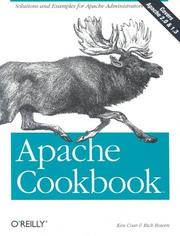 Apache CookbookKen Coar, Rich Bowen · 2003
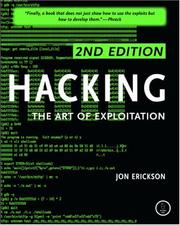 HackingJon Erickson, Jon Erickson · 2003
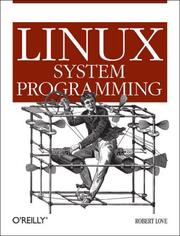 Linux System ProgrammingRobert Love · 2007
 Issues In Internet LawKeith B. Darrell · 2010
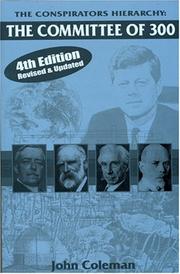 The Conspirators HierarchyJohn Coleman · 1992
 UNIXDeborah S. Ray, Eric J. Ray · 1998
 The UNIX operating systemChristian, Kaare, Kaare Christian · 1983
Ranked by number of editions on Open Library, a rough measure of how lasting a book is.
🔗 Related topics
- Access-control list In computer security, an access-control list (ACL) is a list of permissions associated with a system resource (object or facility). An ACL specifies which…
- Chmod chmod is a shell command for changing access permissions and special mode flags of files (including special files such as directories). The name is short…
- Umask umask is a shell command that reports or sets the mask value that limits the file permissions for newly created files in many Unix and Unix-like file systems…
- Group identifier In Unix-like systems, multiple users can be put into groups. POSIX and conventional Unix file system permissions are organized into three classes, user…
- Setuid In Unix-like systems, the access rights flags setuid and setgid (short for set user identity and set group identity) allow users to run an executable with…
- Ls ls is a shell command for listing files – including special files such as directories. Originally developed for Unix and later codified by POSIX and Single…
- File attribute File attributes are a type of metadata that describe and may modify how files and/or directories in a filesystem behave. Typical file attributes may, for…
- Sticky bit In computing, the sticky bit is a user ownership access right flag that can be assigned to files and directories on Unix-like systems. There are two definitions…