Live briefing

Everything about File system
Computer filing system
In computing, a file system or filesystem governs file organization and access. A local file system is a capability of an operating system that services the applications running on the same computer. A distributed file system is a protocol that provides file access between networked computers. Wikipedia →
🧭 Start here: a 6-step reading path
- Read the overview: File systemA 5-minute orientation
- Skim a recent paper: Survey of Distributed File System Design ChoicesInfluential work since 2022
- Pick up a classic book: The Autobiography of Benjamin FranklinThe most-reprinted book on the subject
- Read the landmark paper: The Google file systemCited 1,571 times
- Go sideways: List of file systemsA closely related topic
- Go sideways: Extended file attributesA closely related topic
📖 Definitions
Noun A physical system for organizing documents, as in a library or office.
Noun A method of organizing blocks of data on a storage device into files and directories.
Noun A set of blocks that are organized in this way.
🗂️ The subject at a glance
🏆 Landmark papers (most cited)
The Google file system
The quantcast file system
Gfarm Grid File System
The Cedar file system
The Alpine file system
On incremental file system development
File system aging—increasing the relevance of file system benchmarks
Virtual machine file system
🆕 Influential since 2022
📚 Books worth reading
 The Autobiography of Benjamin FranklinBenjamin Franklin · 1791
 Interactive Computing SeriesKenneth C. Laudon · 1997
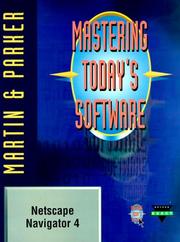 Mastering today's softwareEdward G. Martin, Charles S. Parker · 1992
 I-SeriesStephen Haag · 2001
 The Complete Guide to Blender GraphicsJohn M. Blain · 2016
 DOS for DummiesDan Gookin · 1991
 Information systems literacyHossein Bidgoli · 1993
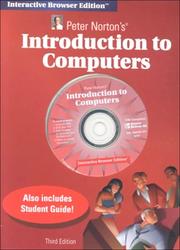 Peter Norton's Introduction to ComputersPeter Norton · 1988
Ranked by number of editions on Open Library, a rough measure of how lasting a book is.
🔗 Related topics
- List of file systems The following lists identify, characterize, and link to more thorough information on file systems. Many older operating systems support only their one…
- Extended file attributes Extended file attributes are file system features that enable users to associate computer files with metadata not interpreted by the filesystem, whereas…
- Comparison of file systems The following tables compare general and technical information for a number of computer file systems. All widely used file systems record a last modified…
- Volume (computing) In computer data storage, a volume or logical drive is a distinctly-addressable storage area with a single file system. Storage can be designed and configured…
- High Performance File System HPFS (High Performance File System) is a file system created specifically for the OS/2 operating system to improve upon the limitations of the FAT file…
- Inode An inode (index node) is a data structure in a Unix-style file system that describes a file-system object such as a file or a directory. Each inode stores…
- Disk partitioning Disk partitioning or disk slicing is the creation of one or more regions on secondary storage, so that each region can be managed separately. These regions…
- IBM Tivoli Storage Manager IBM Storage Protect (formerly IBM Spectrum Protect / Tivoli Storage Manager (TSM)) is a data protection platform that gives enterprises a single point…