Live briefing
Everything about File integrity monitoring
File integrity monitoring (FIM) is an internal control or process that performs the act of validating the integrity of operating system and application software files using a verification method between the current file state and a known, good baseline. This comparison method often involves calculating a known cryptographic checksum of the file's original baseline and comparing with the calculated checksum of the current state of the file. Other file attributes can also be used to monitor integrity. Wikipedia →
🧭 Start here: a 6-step reading path
- Read the overview: File integrity monitoringA 5-minute orientation
- Skim a recent paper: Analyzing Wazuh-Based File Integrity Monitoring for Layered Academic Server SecurityInfluential work since 2022
- Pick up a classic book: Resolution Trust CorporationThe most-reprinted book on the subject
- Read the landmark paper: Monitoring File Integrity Using Blockchain and Smart ContractsCited 18 times
- Go sideways: Security information and event managementA closely related topic
- Go sideways: Log management knowledge baseA closely related topic
📖 Definitions
No dictionary entry for this exact phrase.
🗂️ The subject at a glance
🏆 Landmark papers (most cited)
Monitoring File Integrity Using Blockchain and Smart Contracts
A guest-transparent file integrity monitoring method in virtualization environment
File integrity monitoring tools: Issues, challenges, and solutions
Real-Time Intrusion Detection of Insider Threats in Industrial Control System Workstations Through File Integrity Monitoring
Vanguard: A Cache-Level Sensitive File Integrity Monitoring System in Virtual Machine Environment
Comparing two cryptographic hash algorithms: SHA-512 and whirlpool- a case study on file integrity monitoring
File Integrity Monitoring as a Method for Detecting and Preventing Web Defacement Attacks
File integrity monitoring in the modern threat landscape
🆕 Influential since 2022
Analyzing Wazuh-Based File Integrity Monitoring for Layered Academic Server Security
Integrasi Wazuh File Integrity Monitoring Dan Suricata Dengan Notifikasi Telegram Untuk Keamanan Jaringan
A Hybrid Model of File Integrity Monitoring: Combining Traditional Methods with Machine Learning
Adaptive File Integrity Monitoring for Container Virtualization Environments using OSSEC with Real-Time Alerting
Implementasi Wazuh FIM (File Integrity Monitoring) untuk Perlindungan Keamanan Sistem Informasi pada Unit Kegiatan Mahasiswa di Universitas Trunojoyo Madura
📚 Books worth reading
- 📕Resolution Trust CorporationUnited States. General Accounting Office · 1990
 Operations ManagementRoberta S. Russell, Bernard Taylor · 1998
 Video systems in an IT environmentAl Kovalick · 2005
 HadoopTom White, Tom White · 2009
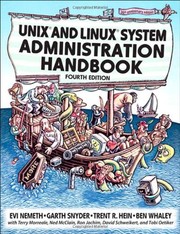 Unix System Administration HandbookEvi Nemeth, Garth Snyder · 1989
 The web application hacker's handbookDafydd Stuttard, Marcus Pinto · 2007
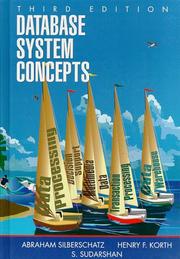 Database system conceptsAbraham Silberschatz · 1997
 The Conspirators HierarchyJohn Coleman · 1992
Ranked by number of editions on Open Library, a rough measure of how lasting a book is.
🔗 Related topics
- Security information and event management Security information and event management (SIEM) is a field within computer security that combines security information management (SIM) and security event…
- Log management knowledge base The Log Management Knowledge Base is a free database of detailed descriptions on over 20,000 event logs generated by Windows systems, syslog devices and…
- NIST SP 800-92 NIST Special Publication 800-92, "Guide to Computer Security Log Management", establishes guidelines and recommendations for securing and managing sensitive…
- Information security standards Information security standards (also cyber security standards) are guidelines generally outlined in published materials that aim to protect a user's or…
- Audit trail An audit trail (also called audit log) is a security-relevant chronological record, set of records, and/or destination and source of records that provide…
- Managed Trusted Internet Protocol Service Managed Trusted Internet Protocol Service (MTIPS) was developed by the US General Services Administration (GSA) to allow US Federal agencies to physically…
- Control system security Control system security, or industrial control system (ICS) cybersecurity, is the prevention of (intentional or unintentional) interference with the proper…
- Federal Information Security Management Act of 2002 The Federal Information Security Management Act of 2002 (FISMA, 44 U.S.C. § 3541, et seq.) is a United States federal law enacted in 2002 as Title III…